





Waking up with a stiff neck usually has less to do with how you slept and more to do with what you slept on. A pillow that’s too high pushes your head forward all night. One that’s too flat lets it sink back. Either way, your cervical spine spends seven or eight hours out of alignment, and you feel it the moment you sit up.
Around half of all adults deal with significant neck pain at some point, and for many of them, the pillow is the easiest fix to try before anything else. That’s where cervical pillows come in. Unlike a standard rectangle of fluff, they’re contoured to hold the natural curve of your neck while you sleep.
The catch? There are hundreds of them, and most look nearly identical online. We dug through expert testing, chiropractor recommendations, and thousands of real user reviews to narrow it down to six pillows that actually deliver in 2026. Here’s what made the cut.
Quick Comparison
| Pillow | Best For | Fill | Adjustable | Price Range |
| Tempur-Pedic TEMPUR-Neck | Overall support | TEMPUR foam | No (3 sizes) | $$$ |
| Osteo Cervical Pillow | Neck pain relief on a budget | Memory foam | Yes (height insert) | $$ |
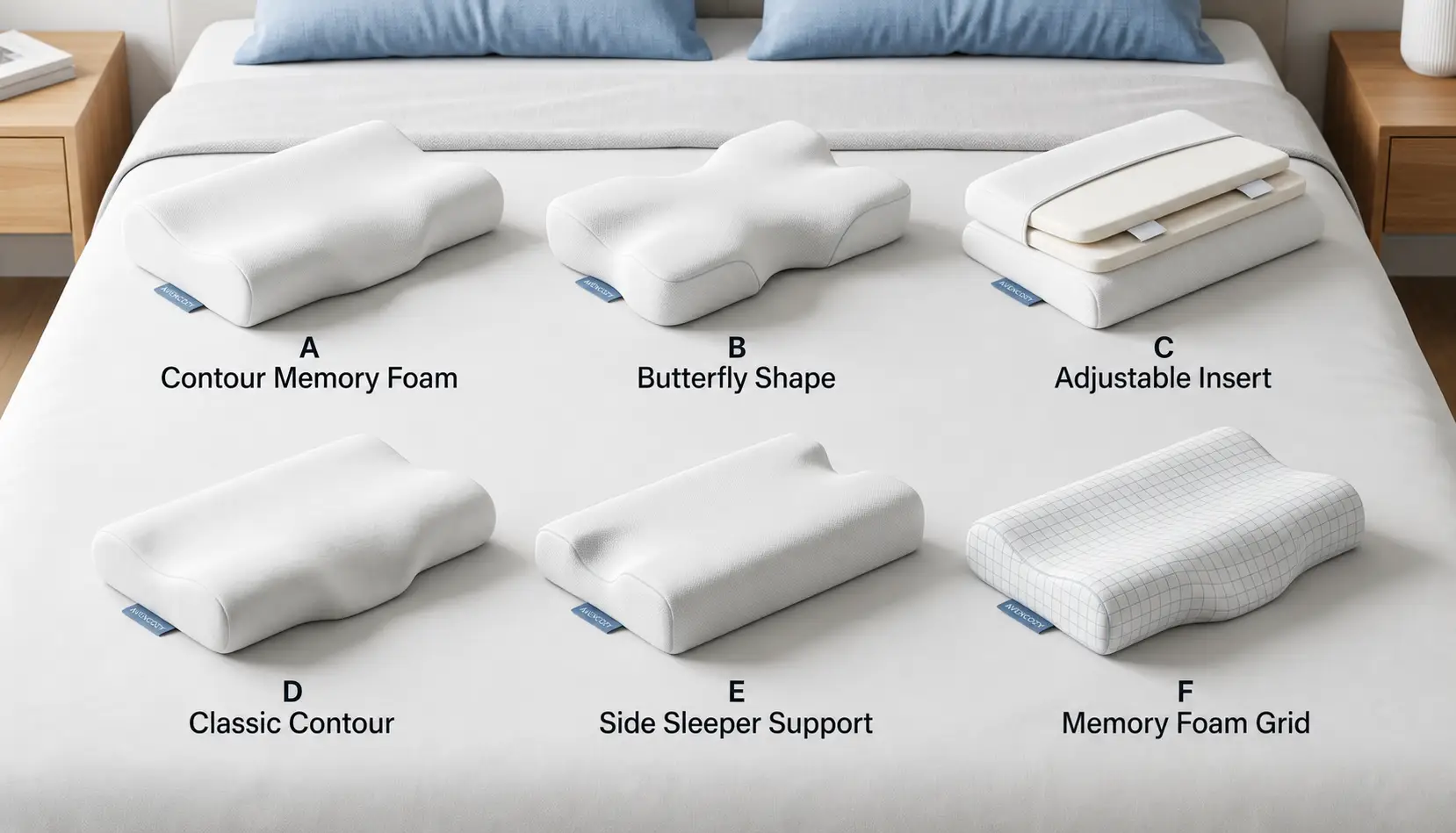
| Elviros Cervical Pillow | Side and back sleepers | Contour memory foam | Dual heights | $ |
| Zamat Adjustable Cervical Pillow | Customizable loft | Memory foam + inserts | Yes | $ |
| Coop Original Adjustable | Sleepers who hate contour pillows | Shredded foam blend | Fully adjustable | $$ |
| Eli & Elm Side Sleeper Pillow | Dedicated side sleepers | Latex + polyfill | Yes | $$$ |
1. Tempur-Pedic TEMPUR-Neck: Best Overall
The TEMPUR-Neck has been the benchmark cervical pillow for years, and it still holds that spot in 2026. It’s a single piece of Tempur-Pedic’s dense proprietary foam shaped into a classic contour: a raised ridge under your neck, a lower cradle for your head.
What separates it from cheaper contour pillows is the foam itself. TEMPUR material is firm and slow-responding, so it doesn’t flatten out after a few months the way budget memory foam often does. The support you feel in week one is roughly the support you’ll feel in year three. It comes in three heights (3.5, 4, and 4.75 inches), which matters because cervical support only works if the loft matches your frame.
Pros
- Extremely durable foam that keeps its shape for years
- Genuine, consistent neck support all night
- Three size options to match your build and sleep position
Cons
- Firm feel takes getting used to, especially in the first week or two
- No sleep trial
- The most expensive pick on this list
Who should buy it: Back and side sleepers with recurring neck pain who want a pillow that won’t degrade.
Who should skip it: Anyone who prefers a soft, plush feel, or stomach sleepers, who generally need something much flatter.
2. Osteo Cervical Pillow: Best for Neck Pain Relief
The Osteo takes a different approach from the standard contour design. It has a hollow center that cradles the back of your head while the surrounding foam supports your neck, gently encouraging the cervical curve rather than just propping it up. Forbes named it their best cervical pillow for neck pain this year, and the design is a big reason why.
It also solves the most common complaint about contour pillows: fixed height. The Osteo ships with a removable insert at the base, so you can lower the loft if the default feels too tall. The cooling cover is a nice touch if you tend to sleep warm.
Pros
- Hollow center design relieves pressure on the back of the head
- Adjustable height via removable insert
- Cooling pillowcase included, priced well below premium brands
Cons
- The shape looks unusual and takes a few nights of adjustment
- Memory foam won’t last as long as TEMPUR material
Who should buy it: Back sleepers and combination sleepers who want targeted pain relief without a premium price tag.
Who should skip it: Anyone who wants a pillow that feels like a normal pillow. This one doesn’t.
3. Elviros Cervical Pillow: Best for Side and Back Sleepers
The Elviros is one of the best-reviewed cervical pillows on Amazon, with tens of thousands of ratings behind it, and the design explains the loyalty. It’s a dual-height contour pillow: sleep on the higher side (about 5.1 inches) for firmer cervical support on your back, or flip to the lower side when you want less lift.
The detail side sleepers appreciate most is the armrest cutouts along the edges. They give your top arm somewhere to go, which stops the shoulder-hunching that causes a lot of morning stiffness. The foam is CertiPUR-US certified, and the cover is a breathable ice-silk fabric that stays reasonably cool.
Pros
- Two heights in one pillow
- Side cutouts reduce shoulder compression for side sleepers
- Excellent price for the design quality
Cons
- The foam is on the firmer side, and softer variants sacrifice some support
- Budget memory foam can soften noticeably after a year or so of nightly use
Who should buy it: Side sleepers, back sleepers, and anyone trying a cervical pillow for the first time without spending much.
Who should skip it: People with broad shoulders who need a taller loft than 5.1 inches.
4. Zamat Adjustable Cervical Pillow: Best Customizable Loft
Zamat built its reputation on cervical pillows, and this adjustable model shows why. It’s a contour design with removable memory foam inserts roughly 0.8 inches thick, letting you dial the height up or down until your neck sits level. Rotate the pillow 180 degrees and you get yet another loft option, so one pillow effectively covers four configurations.
The feel is medium-soft, noticeably gentler than the Elviros or TEMPUR-Neck. That makes it a good middle ground for people who want cervical support but find firm contour pillows uncomfortable.
Pros
- Removable inserts make the height genuinely customizable
- Softer feel than most contour pillows
- Odorless foam and a washable cooling cover
Cons
- Medium-soft support may not be enough for severe neck pain
- Adjusting inserts is slightly fiddly until you find your setting
Who should buy it: Sleepers who switch positions during the night, or anyone unsure what loft they need.
Who should skip it: People who need firm, unyielding support to keep their neck aligned.
5. Coop Original Adjustable Pillow: Best Non-Contour Option
Not everyone can sleep on a molded contour shape, and that’s fine. The Coop Original looks like a regular pillow but works like a cervical one, because you control exactly how much shredded memory foam is inside. Add fill for a taller, firmer pillow. Remove it for something lower and softer. It even ships with an extra half-pound bag of foam.
Forbes rated it the best adjustable pillow for neck pain, and it’s the pick most often recommended to people who bought a contour pillow and couldn’t adapt to it. The shredded fill moves with you instead of forcing your head into one spot.
Pros
- Infinitely adjustable loft and firmness
- Feels like a normal pillow, no adaptation period
- Works for back, side, and even stomach sleepers once adjusted
Cons
- No contoured neck ridge, so support is less targeted
- Shredded foam needs occasional fluffing to stay even
Who should buy it: Anyone who wants better neck support without committing to a contour shape.
Who should skip it: People with chronic cervical issues who need structured, position-holding support.
6. Eli & Elm Side Sleeper Pillow: Best for Side Sleepers
Side sleepers face a specific problem: the shoulder. A flat pillow forces your head to tilt down toward the mattress, while your shoulder gets crushed underneath you. The Eli & Elm solves this with a U-shaped curve cut into the bottom edge that wraps around your shoulder, letting your head rest at the correct height without your shoulder fighting for space.
The fill is a blend of latex and polyester fiber, and it’s adjustable, so you can remove fill to fine-tune the loft. It’s responsive and springier than memory foam, which makes repositioning easier during the night.
Pros
- Shoulder cutout keeps the spine neutral for side sleepers
- Adjustable latex-blend fill with a responsive feel
- Sleeps cooler than solid memory foam
Cons
- Only useful for side sleeping; the shape doesn’t suit back sleepers
- Premium price for a single-position pillow
Who should buy it: Dedicated side sleepers with neck or shoulder pain.
Who should skip it: Combination sleepers who spend part of the night on their back or stomach.
How to Choose the Best Pillow for Neck Pain
A few things matter more than brand names when you’re shopping.
Match the loft to your sleep position. Side sleepers need a taller pillow (usually 4 to 6 inches) to fill the gap between shoulder and head. Back sleepers do better around 3 to 5 inches. Stomach sleepers need very low loft, and honestly, most cervical pillows aren’t built for them.
Firmness is about alignment, not comfort. Dr. Sherry McAllister of the Foundation for Chiropractic Progress points out that maintaining the neck’s natural curve, called the cervical lordotic curve, is the key to avoiding pain. A pillow that’s plush but lets your head sink is working against you.
Check the foam density. This is the quiet difference between a $30 pillow and a $100 one. Cheap memory foam compresses over months of nightly use, and once it does, the support disappears and the pain tends to come back. Denser foams like TEMPUR material or latex hold their shape far longer.
Give it two weeks. Nearly every cervical pillow feels strange at first. Your neck muscles are used to a bad position, and correcting it can cause mild soreness for a few nights. If it still hurts after two weeks, the loft is probably wrong for you.
One more thing worth saying: a pillow can ease mechanical neck pain, but it can’t fix everything. If your pain is severe, radiates into your arms, or comes with numbness or tingling, see a doctor before spending money on bedding.
Final Verdict
If budget isn’t the deciding factor, the Tempur-Pedic TEMPUR-Neck is the safest long-term buy. The foam quality means the support you’re paying for actually lasts.
For most people, though, the Elviros Cervical Pillow hits the sweet spot: dual heights, side-sleeper cutouts, and a price low enough that trying it is a small risk. If contour shapes just aren’t for you, go with the Coop Original Adjustable and tune it to your neck instead.
Frequently Asked Questions
Do cervical pillows really help with neck pain?
For many people, yes. A cervical pillow supports the natural curve of the neck so muscles can relax overnight instead of straining. Results depend on choosing the right height for your sleep position, and it may take one to two weeks of consistent use before you notice improvement.
How long does it take to adjust to a cervical pillow?
Most people need about one to two weeks. Mild soreness during the first few nights is normal because your neck is adapting to a corrected position. If discomfort continues beyond two weeks, the pillow’s loft is likely too high or too low for you.
What pillow height is best for neck pain?
It depends on your sleep position. Side sleepers usually need 4 to 6 inches of loft to keep the head level with the spine. Back sleepers do best with 3 to 5 inches. Stomach sleepers need a very thin pillow, ideally under 3 inches.
Is memory foam or latex better for neck support?
Memory foam contours closely and holds the neck in place, which suits people needing firm, targeted support. Latex is springier, sleeps cooler, and lasts longer, but offers less of a cradling feel. For chronic neck pain, dense memory foam or TEMPUR-style material is usually the stronger choice.
Can the wrong pillow cause neck pain?
Yes. A pillow that’s too high pushes the head forward and strains muscles, while one that’s too flat lets the head drop back or tilt sideways. Both positions hold the cervical spine out of alignment for hours, which is a common cause of morning stiffness.
How often should I replace a cervical pillow?
Replace a budget memory foam cervical pillow every 18 to 24 months, or sooner if the contour has visibly flattened. Premium dense foams like TEMPUR material and latex can last 3 to 5 years. Once a pillow stops springing back to its original shape, the support is gone.