

If you’ve spent any time shopping for a new mattress, you’ve probably run into Casper and Purple more than once. Both brands built their names on being different from the stack of springs your parents slept on, and both still show up near the top of almost every “best mattress” list in 2026.
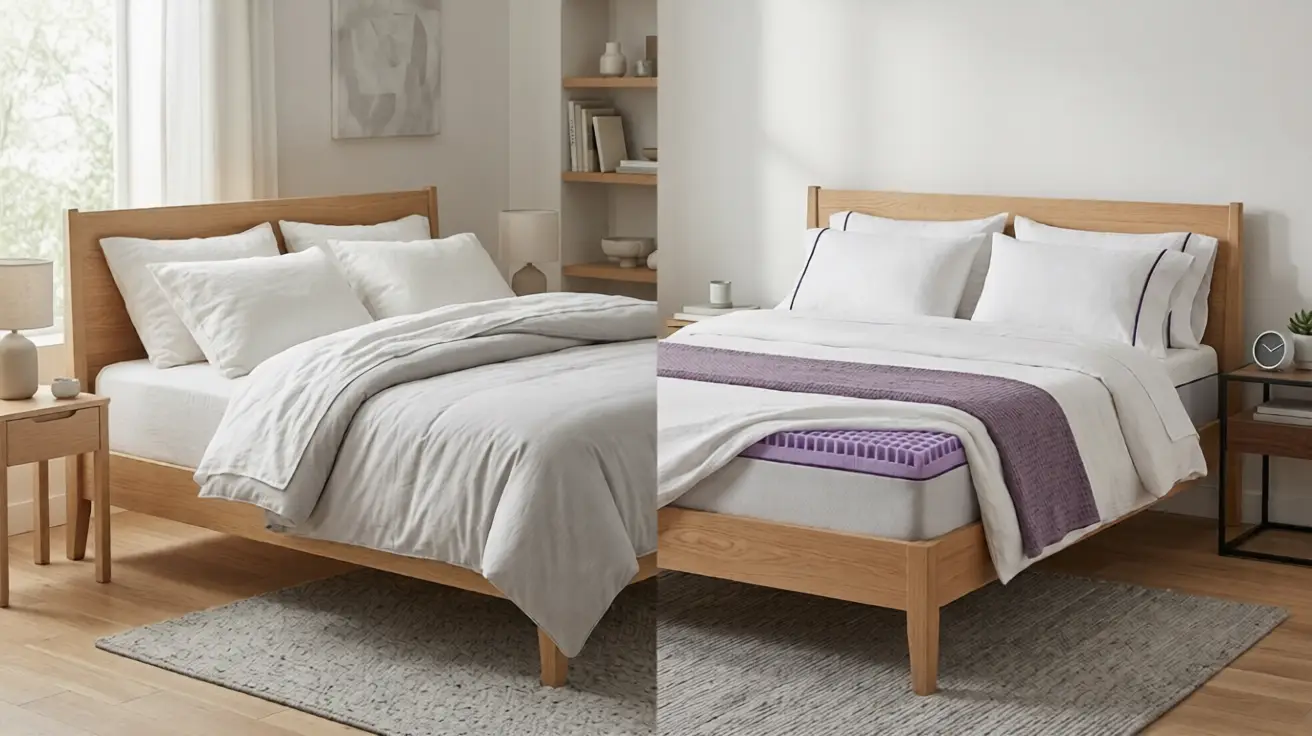
But they solve the same problem in almost opposite ways. Casper leans on foam that hugs your body. Purple leans on a gel grid that pushes back and lets air flow straight through it. That single design choice ripples into everything else: how hot you sleep, how much you feel your partner roll over at 2 a.m., and how much you’ll pay.
Here’s what actually separates them, based on how each brand builds its mattresses, what real testers report, and what current pricing looks like.
Quick Verdict
If you want a classic, cushioned foam feel and you share a bed, Casper is the safer pick. Its foam layers absorb movement well, which matters if your partner tosses and turns.
If you sleep hot or you like a bed that feels more “on top of” you than “sunk into,” Purple is worth the extra money. The GelFlex Grid breathes in a way foam simply can’t match.
Neither is wrong. It comes down to how you want a mattress to feel against your body.
Casper vs Purple at a Glance
| Casper | Purple | |
| Signature material | Zoned Support foam (memory foam + polyfoam) | GelFlex Grid (hyper-elastic polymer) |
| Firmness range | 4.5–7 out of 10 depending on model | 6–6.5 out of 10 depending on model |
| Entry price (queen) | $799 (The One) | $1,099 (Purple Mattress) |
| Flagship hybrid price (queen) | $2,495–$2,995 (Snow / Snow Max) | $3,499–$4,899 (Restore Premier / Rejuvenate) |
| Feel | Cushioned, hugging, close contour | Springy, “floating,” pushes back |
| Cooling | Good on hybrids, best on Snow line | Strong across the whole lineup thanks to open grid |
| Motion isolation | Very good | Fair, some grid pull noticeable |
| Sleep trial | 100 nights, 30-night break-in required | 100 nights, 21-night break-in required |
| Warranty | 10-year limited | 10-year limited |
How Each Brand Builds Its Mattresses
Casper: Foam, Zoned for Support
Casper’s whole lineup runs on what it calls Zoned Support, a layer of foam that’s softer near the shoulders and firmer under the hips and lower back. The idea is simple: your shoulders need to sink in a little, your hips shouldn’t sink in at all, or your spine ends up out of line.
The entry-level model, The One, is all foam and sits around medium-firm. Step up to the Dream or Snow lines and you get individually wrapped coils under the foam, which adds bounce, better airflow, and a firmer edge you can actually sit on without sliding off. The Snow and Snow Max models add phase-change material and aluminum “Heat Delete Bands” specifically to fight overheating, which has historically been foam’s biggest weakness.
Purple: A Grid Instead of Foam
Purple’s approach starts from a different question: what if the top layer wasn’t foam at all? The GelFlex Grid is a hyper-elastic polymer molded into thousands of small squares. Under light pressure it barely moves. Under a hip or shoulder, the walls of the grid buckle and let that spot sink in while everything around it stays supportive. Purple’s non-hybrid mattresses in the Essential Collection use extra foam layers to add support at the base or cushioning on top, while the Restore and Rejuvenate collections add coils underneath the grid for a springier, more traditional hybrid feel.
Because the grid is mostly open space, air moves through it instead of getting trapped the way it does in dense foam. That’s the whole reason people describe Purple as sleeping cooler.
Firmness and Feel
This is where the two brands actually feel most different, even though their firmness numbers land close together on paper.
Casper’s medium-firm models feel like sinking in slightly and getting cradled. Reviewers consistently describe it as a gentle hug, especially in the memory foam layer near the top. It’s the feel most people picture when they think “foam mattress.”
Purple feels almost the opposite, even at a similar firmness rating. Testers describe it as floating rather than sinking, since the grid supports your weight broadly while flexing right at your pressure points. You can feel the grid’s texture at first touch, though most people stop noticing it once they’re lying down.
If you’re a stomach sleeper, Casper generally has the edge, since its firmer center zone keeps hips from dropping too low. Side sleepers tend to do well on either, though heavier side sleepers often prefer Purple because their weight activates the grid more fully. Lighter sleepers sometimes find the grid feels firmer than expected, since there isn’t enough weight to compress it.
Temperature: Purple’s Clearest Win
If overheating is your main complaint with your current mattress, Purple has a structural advantage. The grid is full of open channels, so air keeps moving through the mattress all night instead of building up under you. Casper’s all-foam models trap more heat by comparison, though the brand has closed that gap on its hybrid line. The Snow and Snow Max models use phase-change covers and internal cooling bands specifically to compete on this exact point.
So the fair comparison isn’t “Casper vs Purple” on cooling. It’s “Casper Snow vs Purple.” At that level, the two are much closer, though most side-by-side lab tests still give Purple a slight edge on raw airflow.
Motion Isolation: Better for Couples on Casper
Foam is good at one thing gel grids aren’t: absorbing movement. Casper’s memory foam layer, even on hybrid models, does a solid job of stopping motion from traveling across the bed when your partner shifts position or gets up. Testers consistently rank Casper above Purple here.
Purple’s grid is more responsive by design, which is great for changing positions easily but means some motion transfer is noticeable, especially on the all-foam Essential models without coils underneath. If you’re a light sleeper sharing a bed with someone restless, that’s worth weighing seriously.
Pricing, Trials, and Warranties
Casper is the more affordable entry point. The One starts at $799 for a queen, and Casper runs frequent sales that can knock 20 to 30 percent off, especially around holidays. Its priciest hybrid, the Snow Max, tops out around $2,995 before discounts.
Purple’s cheapest model, the PurpleFlex, starts around $1,099 to $1,299 depending on current promotions. Its luxury Rejuvenate line climbs much higher, with some configurations reaching $4,899 to over $10,000 depending on size and finish. On average, Purple mattresses run a few hundred dollars more than Casper’s across comparable tiers.
Both brands offer a 100-night sleep trial and a 10-year limited warranty, so the coverage is essentially even. The difference is in the break-in period: Casper asks you to sleep on the mattress for 30 nights before you can start a return, while Purple only requires 21. If you’re on the fence, that shorter window with Purple means less waiting to decide it’s not working.
Who Should Buy Casper
- You like the classic, cushioned foam feel
- You share a bed and want strong motion isolation
- You’re working with a tighter budget
- You want a wide range of firmness options across one lineup
- You prefer a mattress that doesn’t feel like it’s pushing back
Who Should Buy Purple
- You run hot at night and cooling is a top priority
- You like a springier, more responsive surface
- You don’t mind paying more for a genuinely different mattress construction
- You’re a heavier sleeper who wants the grid’s pressure relief to actually engage
- You want the shorter 21-night trial window
A Few Honest Downsides
Casper’s biggest weakness is still heat retention on the all-foam models. If you’re buying The One and you sleep hot, you’ll likely regret skipping the hybrid line.
Purple’s biggest weakness is price and, for some sleepers, the initial feel of the grid itself. A few reviewers note they could feel the individual grid squares for the first week or two before adjusting. It’s also worth noting that motion transfer is a real consideration if you share a bed and either of you moves a lot at night.
Alternatives Worth a Look
If neither quite fits, a few other brands solve similar problems. Helix Midnight Luxe offers zoned coils similar to Casper’s approach at a comparable price. Saatva Classic is worth a look if you want a traditional innerspring feel with strong edge support. For hot sleepers who find Purple’s price steep, Casper’s Snow line is the more budget-friendly cooling option.
FAQ
Is Casper or Purple better for back pain?
Both can work well, but it depends on your sleep position. Casper’s zoned support tends to help back and stomach sleepers keep their spine aligned. Purple’s grid is often recommended for side sleepers dealing with hip and shoulder pressure.
Which mattress sleeps cooler, Casper or Purple?
Purple sleeps cooler overall thanks to the open GelFlex Grid, though Casper’s Snow and Snow Max models close most of that gap with dedicated cooling technology.
Which is cheaper, Casper or Purple?
Casper is cheaper at every tier. Its entry model starts around $799 for a queen, compared to roughly $1,099 for Purple’s least expensive mattress.
Do Casper and Purple both offer free returns?
Yes. Both brands include a 100-night trial with free return pickup, though Casper requires a 30-night break-in period before you can start a return, while Purple’s is 21 nights.
Is Purple good for couples?
It can work, but Casper generally isolates motion better. If minimizing disturbance from a partner is your top concern, Casper has the edge.
Final Verdict
There’s no single winner here, only a better fit depending on how you sleep. Casper gives you a familiar, cushioned foam feel at a lower price and handles motion better for couples. Purple costs more but delivers noticeably cooler sleep and a springier, more responsive surface that heavier and hot sleepers tend to prefer.
If you’re still torn, think about what’s actually bothered you about your last mattress. Waking up sweaty points to Purple. Feeling every move your partner makes points to Casper. That one detail usually settles it.