

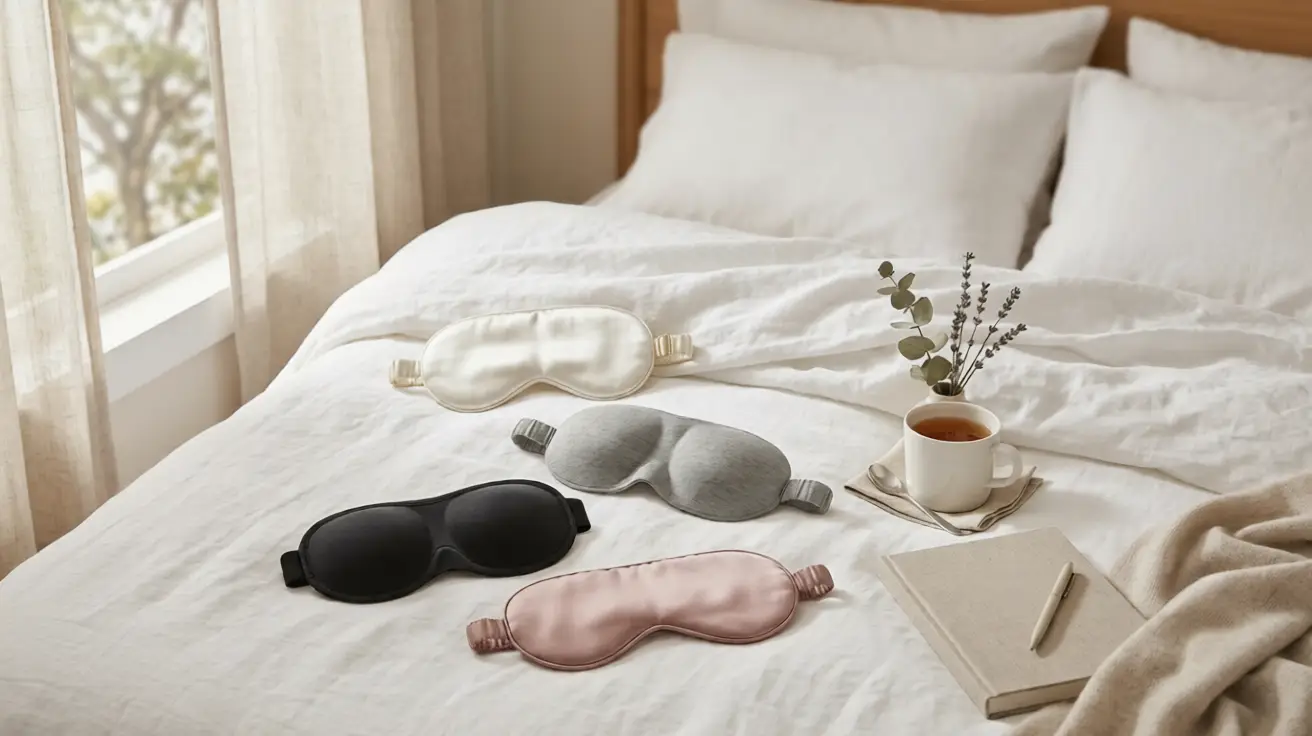
A good sleep mask sounds like a simple thing. Strap on some fabric, block the light, fall asleep. In practice, most masks fail at the one job they exist for. They leak light at the nose, slip off when you roll over, press on your eyelids until your lashes ache, or trap heat until you yank them off at 3 a.m.
After going through testing notes from CNN Underscored, Consumer Reports, Sleep Doctor, and a stack of long-term reviews, plus a lot of brutally honest Reddit threads, a few clear winners rose to the top. Below are eight masks worth your money in 2026, sorted by who they’re actually for. There’s a quick comparison table first, then the full breakdown.
Quick comparison
| Mask | Type | Approx. price | Best for |
| Nidra Deep Rest | Contoured | $25–28 | Best overall, side sleepers |
| Mavogel Cotton | Flat | $10–13 | Budget pick, sensitive skin |
| Manta Original | Adjustable cups | $35 | Custom fit, asymmetrical faces |
| MZOO 3D | Contoured foam | $18–20 | Budget blackout |
| Alaska Bear Silk Contoured | Silk-foam hybrid | $20 | Silk feel on a budget |
| Slip Silk | Flat silk | $50 | Skincare, hair, luxury feel |
| TheraICE Rx | Cooling gel | $25 | Migraines, puffy eyes |
| Manta Cool | Cooling + blackout | $45 | Cooling plus light blocking |
Prices move around, especially during sales, so treat these as ballpark figures.
How we judged them
The non-negotiable is light blocking. Even faint light through closed eyelids can suppress melatonin, the hormone that tells your body it’s time to sleep, which is the whole reason these things exist. Darkness matters for healthy sleep, according to Molly Atwood, PhD, an assistant professor of psychiatry and behavioral medicine at Johns Hopkins Medicine. Reviewers test for this by shining a bright light at a worn mask and checking for leaks, and the nose bridge is almost always the weak spot.
After blackout, the things that separate a good mask from a frustrating one are fit during side sleeping, pressure on your eyes and lashes, strap comfort, breathability, and whether it survives more than a few months of washing.
One quick note on mask styles, since the terms come up a lot. Sleep masks generally come in a few shapes: flat masks that rest directly across your eyes, wraparound headband styles that secure in back, and contoured or 3D masks molded with cups that curve above the eyes. Those cups are the reason contoured masks reduce pressure: the molded shape keeps material off your closed eyelids and lashes.
1. Nidra Deep Rest Best overall
The Nidra is the mask most testers keep coming back to, and it’s earned that reputation honestly. The New York Times Wirecutter named it a top pick for seven straight years, describing it as blocking the most light on the most faces because the contoured structure sits around your eyes rather than directly on them.
What makes it work is a low-profile contoured design with deep enough cups to keep fabric off your lashes, plus a dual-strap system instead of a single band. That second strap matters more than it sounds. You shift position dozens of times a night, and a single strap tends to ride up toward your forehead after a few hours, which breaks the seal. The Nidra’s two anchor points hold it in place through all that movement.
Pros: Excellent blackout, low profile that stays sealed when you press into a pillow, room for eyelashes and lash extensions, dual straps that don’t migrate.
Cons: Some reviewers question how long the lightweight build holds up, and the cup shape looks a little funny if you’re self-conscious about wearing it in public, like on a plane.
Who should buy it: Side sleepers, anyone with lash extensions, and people who want one mask that does everything well. Who should skip it: If you want a buttery silk feel against your skin, this isn’t that.
2. Mavogel Cotton Best budget pick
If you don’t want to spend much, the flat cotton Mavogel is the one to get. CNN Underscored named it the winner of its review, calling it soft, lightweight, and adjustable thanks to a flexible nose wire and head strap, and noting it was the cheapest mask in the pool. It’s thin and lightweight but still blocks light as promised, and the wire beneath the nose makes it essentially non-slip.
The thing to understand about flat masks is they live or die by that nose wire. Without it, light pours in through the gap beside your nose. The Mavogel’s adjustable wire seals that gap better than most masks at any price.
Pros: Very cheap, soft cotton that’s friendly to sensitive skin, adjustable nose wire, thin enough for comfortable side sleeping.
Cons: Being a flat mask, it rests right on your eyelids, so it’s not ideal if you hate any pressure on your eyes or wear lash extensions. Budget masks like this also tend to wear out faster than pricier contoured ones.
Who should buy it: Anyone wanting solid blackout for around ten bucks, or people with sensitive skin who want plain cotton.
Who should skip it: Lash extension wearers and anyone who needs cup-style eye clearance.
3. Manta Original Best customizable fit
The Manta’s whole pitch is adjustability. Its eye cups detach and reposition, and the angle, position, and strap tightness are all adjustable, so you can tune the fit to your face. That’s genuinely useful if your face is asymmetrical or if you’ve never found a one-size mask that seals properly.
It’s a polarizing mask, though. The customization is great when you’re stationary, but several reviewers report the cups can shift or press on your eyes during side sleeping, and it’s bulkier than low-profile contoured masks. One hands-on review did praise it as the most adjustable mask tested, with snag-free velcro that’s a relief if you have long hair, plus included earplugs and a storage bag.
Pros: Unmatched fit customization, snag-free velcro, good build quality, comes with extras.
Cons: Pricier at around $35, bulkier profile that some side sleepers find uncomfortable, cups can reposition when you roll over.
Who should buy it: Back sleepers, frequent travelers, and anyone whose face shape has defeated other masks.
Who should skip it: Committed side sleepers who want the thinnest possible profile.
4. MZOO 3D Best budget blackout
The MZOO is everywhere on Amazon, and the reason is simple: it delivers contoured 3D blackout at roughly $18 to $20. The molded cups create space around your eyes and lashes, and it blocks light effectively even in bright rooms without curtains.
It’s not refined, though, and reviewers are consistent about its flaws. The design is bulky with a lot of material around the nose, and the wide velcro strap can feel scratchy and lacks the engineering of premium masks. The thick side panels can also press on your temples when you’re lying on your side.
Pros: True contoured blackout for under $20, keeps material off your lashes, widely available.
Cons: Bulky, wide scratchy velcro that can catch hair, side panels press on temples during side sleeping, tends not to last as long as mid-tier masks.
Who should buy it: Budget shoppers who want cup-style blackout and don’t mind some bulk.
Who should skip it: Side sleepers sensitive to temple pressure, and anyone bothered by loud velcro.
5. Alaska Bear Silk Contoured Best silk on a budget
This one splits the difference between a soft silk surface and a contoured shape, and it does it cheaply at around $20. Reviewers like it as a comfortable, light-blocking budget option, and one Reddit user quoted in testing called the contoured silk version extremely comfortable on the side, blocking light well with minimal pressure, with the only real knock being its single strap.
That single strap is the recurring complaint. It’s comfortable and seals well for the first few hours, then gradually rides up. If you’re a relatively still sleeper, that may never bother you. If you’re a tosser, you’ll notice.
Pros: Silk-foam hybrid feels nice, good blackout for the price, low profile that works for side sleeping, genuinely affordable.
Cons: Single strap tends to ride up over the night, blackout is good but not quite total compared to the best contoured masks.
Who should buy it: People who want a silk feel without paying luxury prices, and calmer sleepers.
Who should skip it: Restless sleepers who need a strap that won’t budge.
6. Slip Silk Best for skincare and luxury
The Slip is the pick if comfort, hair, and skin matter as much as blackout to you. It’s a flat mask made from premium 22-momme mulberry silk, and people love how it feels. Reviewers highlight its soft, luxurious feel and effective light blocking, along with the smooth silk and comfortable fit, though some find it pricey and a little delicate.
Be honest with yourself about what it’s good at. A flat silk mask is gentle on skin and hair, but the design leaks more light at the nose and temples than a contoured mask, and silk can slip during the night. This is a luxury and skincare buy, not a maximum-blackout buy.
Pros: Beautiful silk feel, gentle on skin and hair, blocks light well in a reasonably dark room.
Cons: Around $50, flat design leaks more light than contoured masks, silk can slip, delicate and needs gentle washing.
Who should buy it: Skincare-focused buyers, people who sleep in already-dark rooms, anyone who wants a mask that feels like a treat.
Who should skip it: Shift workers or anyone needing total daytime blackout.
7. TheraICE Rx Best cooling option for migraines
Cooling masks are a different category, and it helps to be clear-eyed about that. The TheraICE is excellent at what it actually does, which is short cold-therapy sessions. Reviewers found it genuinely effective for acute migraine and inflammation relief in roughly 15 to 20 minute sessions, but noted it causes an “ice cream headache” discomfort over longer wear, and needing freezer access limits its travel use.
In other words, this is a relief tool you keep in the freezer for headaches and puffy eyes, not a mask you wear for eight hours of blackout. Treat it that way and you’ll be happy with it. Expect it to replace your nightly mask and you won’t be.
Pros: Strong cold relief for migraines and sinus pressure, reduces eye puffiness, reusable.
Cons: Not for all-night wear, needs a freezer, rigid when frozen which can let light leak.
Who should buy it: Migraine and headache sufferers, anyone who wants cold therapy for puffy eyes.
Who should skip it: Anyone looking for their main overnight sleep mask.
8. Manta Cool Best cooling mask that still blocks light
If you want some of that cooling benefit without giving up blackout, the Manta Cool is the more sleep-friendly take. It’s a blackout eye mask with reusable cooling pads, zero eye pressure, and an adjustable strap for cool relief. It pairs Manta’s blackout approach with removable cool pads, so it’s far more usable through a full night than a solid frozen gel mask.
It runs around $45, which is steep, and like other Manta masks it’s on the bulkier side. But it’s the sensible choice if you run hot at night and still want real darkness.
Pros: Combines cooling with proper blackout, zero pressure on the eyes, adjustable fit, cool pads are removable.
Cons: Expensive, bulkier profile, cooling is gentler and shorter-lived than a dedicated frozen gel mask.
Who should buy it: Hot sleepers who refuse to sacrifice darkness.
Who should skip it: Budget shoppers, and people who want intense cold for migraines (get the TheraICE for that).
How to choose the right one for you
Start with how you sleep. Side and stomach sleepers should prioritize a low-profile contoured mask with dual straps, because anything bulky gets shoved out of place when your face presses into the pillow. The Nidra is the safe call here. Back sleepers have more freedom and can enjoy the adjustable Manta or a plush silk option.
Then think about your specific gripes. Lash extensions mean you want cup clearance, so skip flat masks entirely. Sensitive skin points toward plain cotton or silk. Light leaks at the nose are the most common complaint, and a contoured nose baffle or an adjustable nose wire is what fixes it. Running hot at night means looking at breathable foam or a cooling design.
Finally, set price expectations realistically. The honest takeaway from comparing masks across the range is that blackout performance doesn’t scale neatly with price. Plenty of $20 to $30 contoured masks block light as well as $50 to $80 ones, and the premium often pays for materials, adjustability, or branding rather than darkness. Spend up if you want silk or custom fit. Don’t assume expensive automatically means darker.
Frequently asked questions
Are sleep masks bad for your eyes?
For most people, no. Sleep masks are generally safe when used correctly and can promote better sleep by blocking light, though a mask that’s too tight or presses too hard on your eyes could cause temporary discomfort or irritation. If a mask hurts, it’s too tight or the wrong style. Contoured masks exist specifically to keep pressure off your eyes.
Do sleep masks actually improve sleep?
They can. Eye masks improve sleep quality by creating darkness, which helps regulate melatonin, the hormone that signals your body to sleep, and they’re especially helpful for people sensitive to light or those who sleep during the day. Shift workers and light-sensitive sleepers tend to notice the biggest difference.
What’s the best type for side sleepers?
A thin contoured mask with two straps. Bulky masks shift and break their light seal when compressed against a pillow, and single straps tend to ride up over the night. Low profile plus dual straps is the winning combination.
How often should I replace my sleep mask?
More often than you’d think, since it sits against your face for hours and collects oils and bacteria. Washing it weekly and replacing it every few months is a reasonable rhythm for hygiene, regardless of how worn it looks.
Are smart masks with Bluetooth and sleep tracking worth it?
For most people, not really. Smart masks are an emerging 2026 trend that adds Bluetooth audio and sleep tracking, but they carry a $40 to $80 premium, add bulk from batteries, and have a high electronic failure rate within 12 months per user reports. If your goal is darkness and comfort, a simple contoured mask does the core job better.
The bottom line
If you just want the best all-around mask and don’t want to overthink it, get the Nidra Deep Rest. It blocks light reliably, stays put when you move, and works for nearly everyone. Tight budget? The Mavogel Cotton punches well above its price. Want silk? The Slip feels wonderful if your room is already dark, and the Alaska Bear gets you most of the silk experience for less. And if heat or headaches are your real problem, the Manta Cool or TheraICE Rx solve those specifically.
Match the mask to how you sleep and what bugs you most, and you’ll likely wonder how you slept without one.