




Walk down any bedding aisle and the numbers jump out at you. 600. 800. 1,000 thread count. The message is obvious: bigger number, better sheets.
Except it isn’t true. Some of the softest, most durable sheets on the market sit in the 200 to 400 range, while plenty of “1,000 thread count” sets feel stiff, heavy, and hot. If you’ve ever splurged on high thread count sheets and wondered why they didn’t feel like a hotel bed, this is why.
Here’s what thread count actually measures, how manufacturers game the number, and what really determines whether a sheet feels soft against your skin.
What Thread Count Actually Means
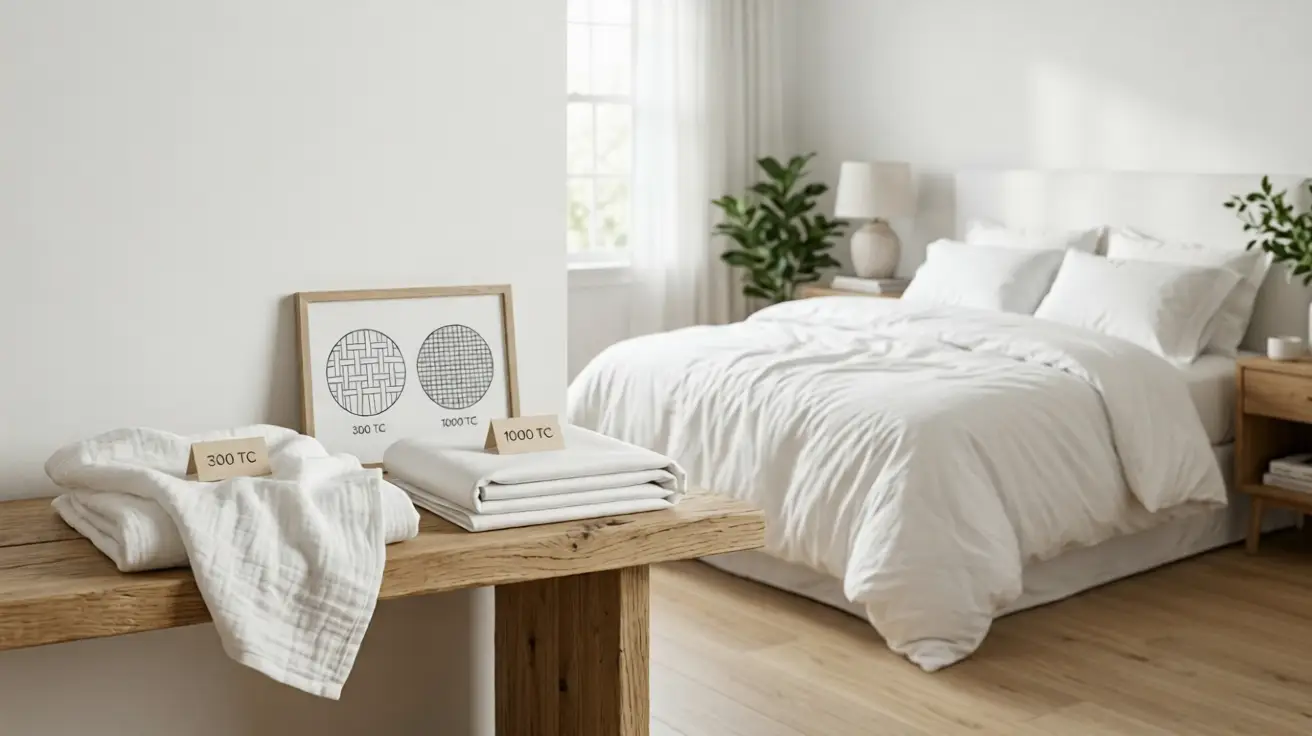
Thread count is the number of threads woven into one square inch of fabric. That includes both the vertical threads (called the warp) and the horizontal ones (the weft).
In theory, more threads per inch means a tighter, smoother weave. And up to a point, that’s true. A 300 thread count sheet will usually feel smoother than a scratchy 120 count sheet made from the same cotton.
The problem is what happens after that point. Once you get past roughly 400 to 500 threads per square inch, you physically run out of room. There’s only so much yarn you can pack into an inch of fabric. Adding more doesn’t make the sheet softer. It often makes it denser, heavier, and worse at breathing, which matters a lot if you sleep warm.
How Sheets End Up With Impossible Numbers
So how do brands advertise 800, 1,000, or even 1,200 thread counts if the loom maxes out around 500?
They count differently.
Instead of using a single thread, some manufacturers twist two or three thinner strands together into one “multi-ply” yarn, then count each strand separately. A sheet with 400 actual threads per inch, each made of three plies, suddenly becomes a “1,200 thread count” sheet on the label.
The catch is that those multi-ply yarns are usually made from thinner, weaker fibers. You end up with a fabric that’s thicker and warmer but not smoother, and often less durable than an honest 300 count sheet.
This isn’t a fringe practice, either. Thread count labeling falls under the Federal Trade Commission’s watch in the US, and retailers have faced class-action lawsuits over disputed thread count claims. Bed Bath & Beyond was sued in 2008 over sheets that allegedly had a real count of 408 but were sold as 800 thread count.
The takeaway: treat any thread count above 600 with healthy suspicion. It’s usually a math trick, not a quality upgrade.
What Actually Makes Sheets Soft
Four things matter far more than the number on the package.
1. Fiber quality (this is the big one)
Softness starts with the raw cotton, specifically the staple length, which is the length of each individual cotton fiber.
Long-staple cotton fibers run roughly 1.1 to 1.3 inches, and extra-long-staple varieties go beyond that. Longer fibers spin into finer, stronger, smoother yarns with fewer fiber ends poking out of the surface. Fewer loose ends means less pilling, and less pilling means the sheet stays smooth wash after wash.
Short-staple cotton does the opposite. The yarn is fuzzier and weaker, so the fabric feels rougher and breaks down faster, no matter how many threads get packed into it.
This is why a 300 thread count sheet made from Egyptian, Pima, or Supima cotton will beat an 800 count sheet made from cheap short-staple cotton every time. On feel, on durability, on how it ages.
One buying note: “Egyptian cotton” on a label doesn’t always mean much on its own, since the term gets abused. Look for brands that specify staple length or carry certifications, or stick with named varieties like Supima (American Pima with verified sourcing).
2. Single-ply vs multi-ply yarn
As covered above, single-ply yarns made from quality long-staple cotton produce lighter, more breathable, more durable sheets. Multi-ply construction mostly exists to inflate the thread count label. If a brand tells you its sheets are single-ply, that’s a genuinely good sign. If it hides the ply and shouts about a huge thread count, that tells you something too.
3. The weave
Two sheets with identical thread counts can feel completely different depending on how the threads are woven.
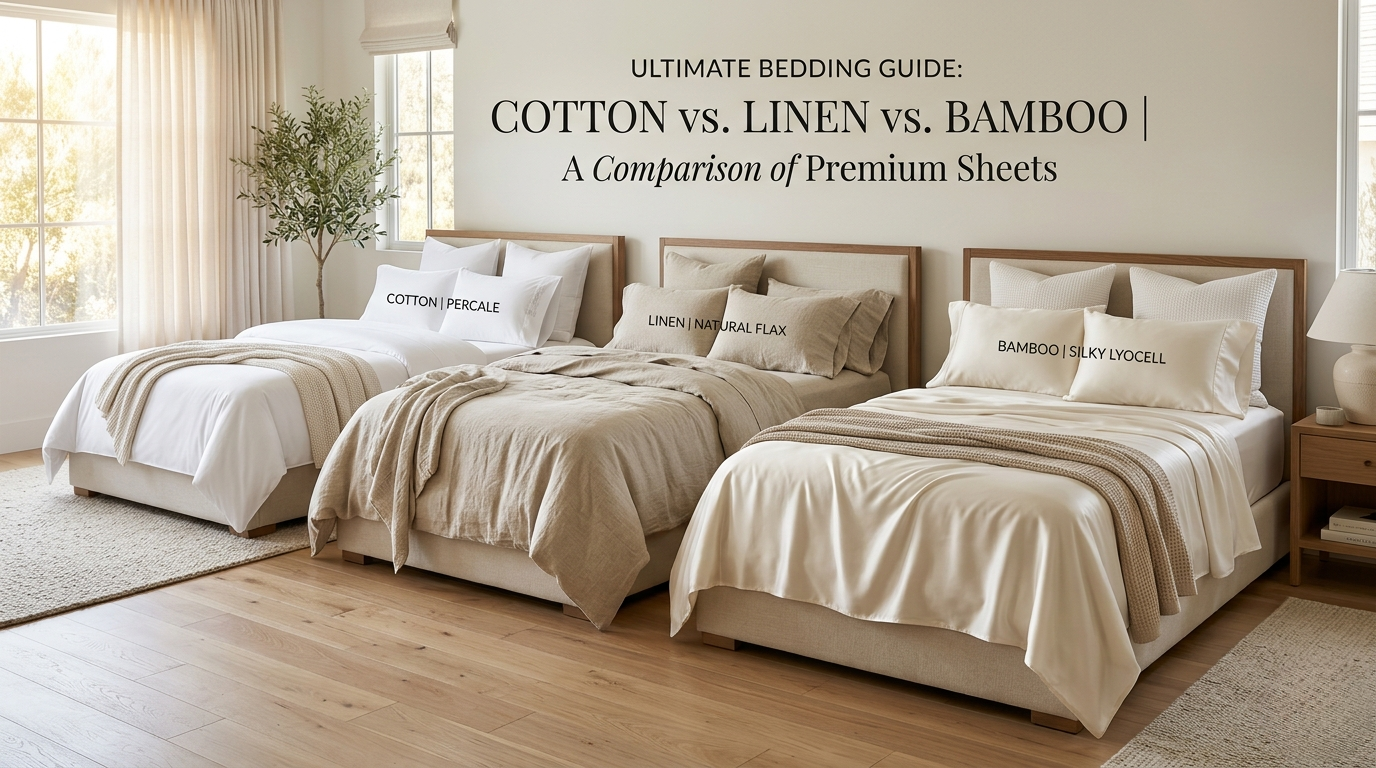
- Percale is a simple one-over-one-under weave. It feels crisp, cool, and matte, a bit like a favorite button-down shirt. It’s the better pick for hot sleepers and it gets softer with every wash. Typical quality range: 200 to 400 thread count.
- Sateen floats more threads over the surface (usually three or four over, one under), which creates a silky, smooth face with a slight sheen. It feels warmer and drapes more heavily, but it can pill sooner than percale and shows snags more easily. Typical quality range: 300 to 600.
Neither weave is “better.” Percale suits people who want cool and crisp. Sateen suits people who want smooth and cozy. Knowing which feel you prefer will do more for your sleep than any thread count comparison.
4. Finishing
How the fabric is treated after weaving matters more than most shoppers realize. Good manufacturers use mechanical finishing, like singeing off surface fuzz, to make the fabric smoother without coating it in anything. Cheaper sheets sometimes rely on chemical softeners that feel great in the store and wash out after a few cycles, which explains why some sheets feel amazing for a month and then turn rough.
If sheets feel suspiciously silky for their price, that softness may be a temporary chemical finish rather than good cotton.
So Does Thread Count Matter at All?
Yes, just not the way the marketing suggests. Think of it as a floor, not a ladder.
Below about 180, cotton sheets tend to feel coarse and loosely woven. Between roughly 200 and 500, you’re in the range where quality sheets live, and within that range, fiber and weave decide how the sheet actually feels. Above 600, the number stops telling you anything useful and often signals multi-ply inflation.
Here’s a quick reference:
| Thread count | What it usually means |
| Under 180 | Rough, thin, budget territory |
| 200–300 | Sweet spot for percale; crisp and breathable |
| 300–500 | Sweet spot for sateen; smooth and substantial |
| 600+ | Diminishing returns; check the ply before trusting it |
| 800–1,200 | Almost always multi-ply math; judge by fiber, not the number |
Also worth knowing: thread count only applies to woven fabrics. Jersey sheets (knit, like a t-shirt), flannel (measured by weight in GSM), and linen or bamboo blends play by different rules entirely. A linen sheet with an 80 to 120 thread count can still be excellent, because linen yarns are naturally thicker.
How to Buy Soft Sheets Without Getting Played
A simple checklist beats a big number:
- Start with fiber. Look for long-staple or extra-long-staple cotton, ideally named (Pima, Supima, verified Egyptian) or certified.
- Check the ply. Single-ply is the quality marker. If ply isn’t listed, ask or assume multi-ply on anything above 600.
- Pick your weave by how you sleep. Hot sleeper? Percale. Want silky and warm? Sateen.
- Ignore anything over 600. At best it’s meaningless, at worst it’s misleading.
- Read reviews for the third month, not the third night. Softness after 15 washes is the real test. Look for mentions of pilling, thinning, or roughness over time.
- Trust transparency. Brands that explain their cotton source, staple length, and weave usually have something real to sell. Brands that lead with a giant thread count often don’t.
FAQ
What is a good thread count for sheets?
For cotton sheets, 200 to 400 for percale and 300 to 600 for sateen covers the quality range. Within those bands, fiber quality and weave matter more than the exact number. Anything advertised above 600 deserves scrutiny, since those counts usually rely on multi-ply yarns.
Are 1,000 thread count sheets worth it?
Usually not. True single-ply weaves top out around 500 to 600 threads per inch, so 1,000 count sheets almost always use multi-ply yarns counted strand by strand. The result is heavier and warmer fabric, not softer fabric. A well-made 300 to 400 count sheet from long-staple cotton is typically the better buy.
Why do hotel sheets feel so soft?
Most luxury hotels use crisp percale sheets in the 250 to 400 range made from quality long-staple cotton, laundered and pressed professionally. The softness comes from the fiber, the weave, and the care routine, not from an extreme thread count.
Do sheets get softer after washing?
Good cotton sheets do. Percale in particular breaks in and softens over the first several washes. Cheap sheets often go the other way: chemical finishes wash out, short fibers start pilling, and the fabric turns rougher over time.
Is percale or sateen softer?
Sateen feels smoother and silkier out of the package because of its thread-heavy surface. Percale feels crisper at first but softens with washing and stays cooler. “Softer” depends on whether you prefer a silky feel or a crisp, cool one.
Does thread count matter for linen or jersey sheets?
No. Thread count is a woven-cotton metric. Linen uses thicker yarns, so quality linen has naturally low counts. Jersey is knit, not woven, and flannel is measured by fabric weight (GSM). Judge those materials by fiber quality and weight instead.
The Bottom Line
Thread count became the bedding industry’s favorite number because it’s easy to print on a package, not because it predicts comfort. Past 400 or so, it tells you almost nothing, and the biggest numbers usually signal marketing tricks rather than better sheets.
What actually makes sheets soft is good cotton with long fibers, honest single-ply yarns, a weave that matches how you sleep, and finishing that doesn’t wash out. Get those four things right and a modest 300 thread count sheet will outfeel and outlast the flashiest 1,000 count set on the shelf.