

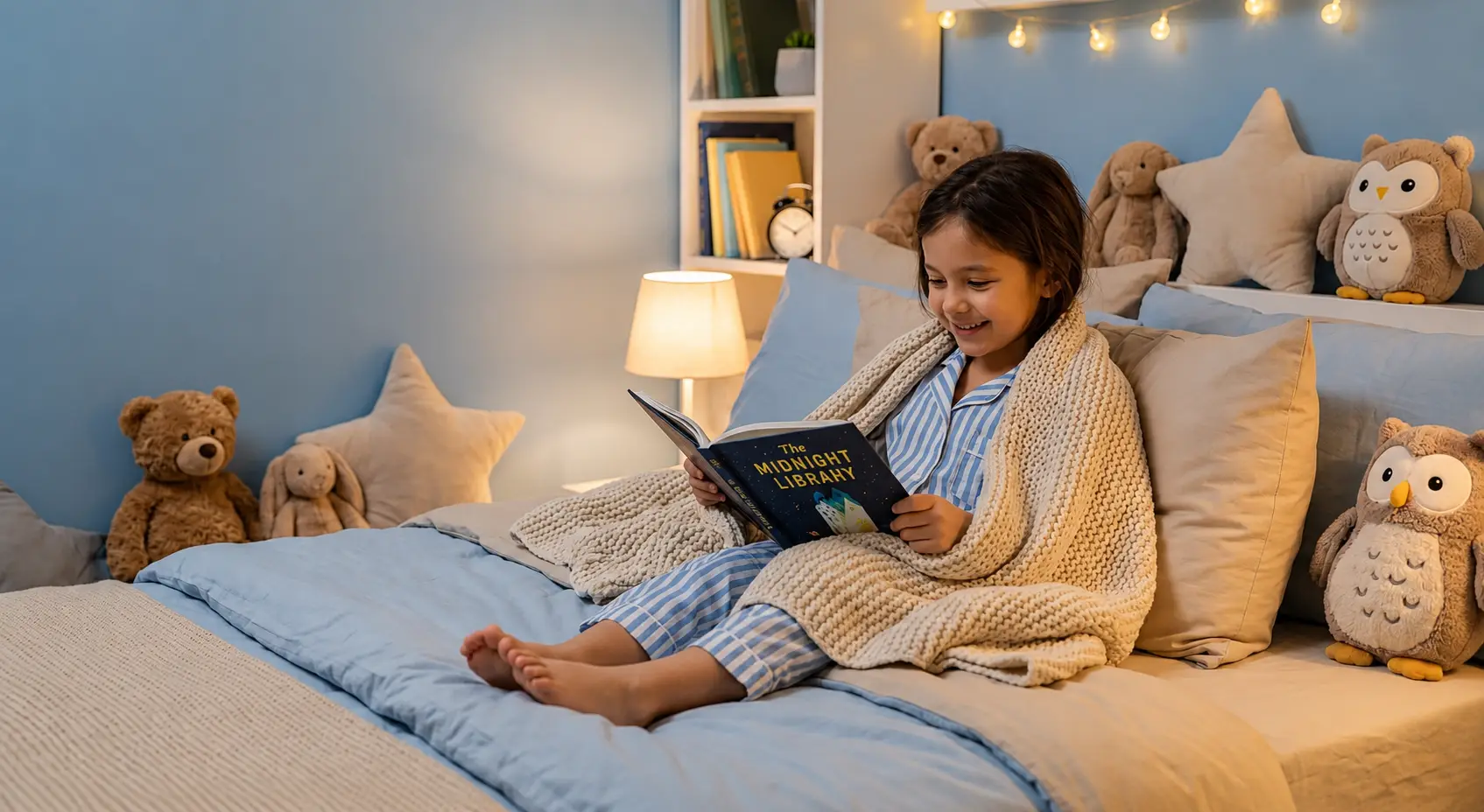
If your child fights bedtime, wakes up at 2 a.m., or comes home from school wired and overstimulated, you’ve probably heard another parent swear by a weighted blanket. The idea is simple. Gentle, evenly distributed pressure feels like a hug, and for many kids that feeling helps them settle down and stay asleep.
The catch is that a weighted blanket for kids is not just a smaller adult blanket. The weight has to match your child’s body, the fabric has to breathe, and there are real safety rules that matter more than any feature on the box.
I dug through current safety guidance, tested reviews, and hundreds of parent comments to narrow the market down to six blankets worth your money in 2026. Before the picks, though, let’s cover the part most product roundups bury at the bottom.
Weighted Blanket Safety for Kids: Read This First
A few rules are non-negotiable, no matter which blanket you buy.
Never use a weighted blanket with a baby or toddler under 2. The suffocation risk is serious, and no product changes that. Most sleep experts and pediatric sources push the safe starting age higher, to at least 3 or 4 years old, and some recommend waiting until 7 for regular overnight use. For kids between 3 and 6, use the blanket only with adult supervision and after talking to your pediatrician.
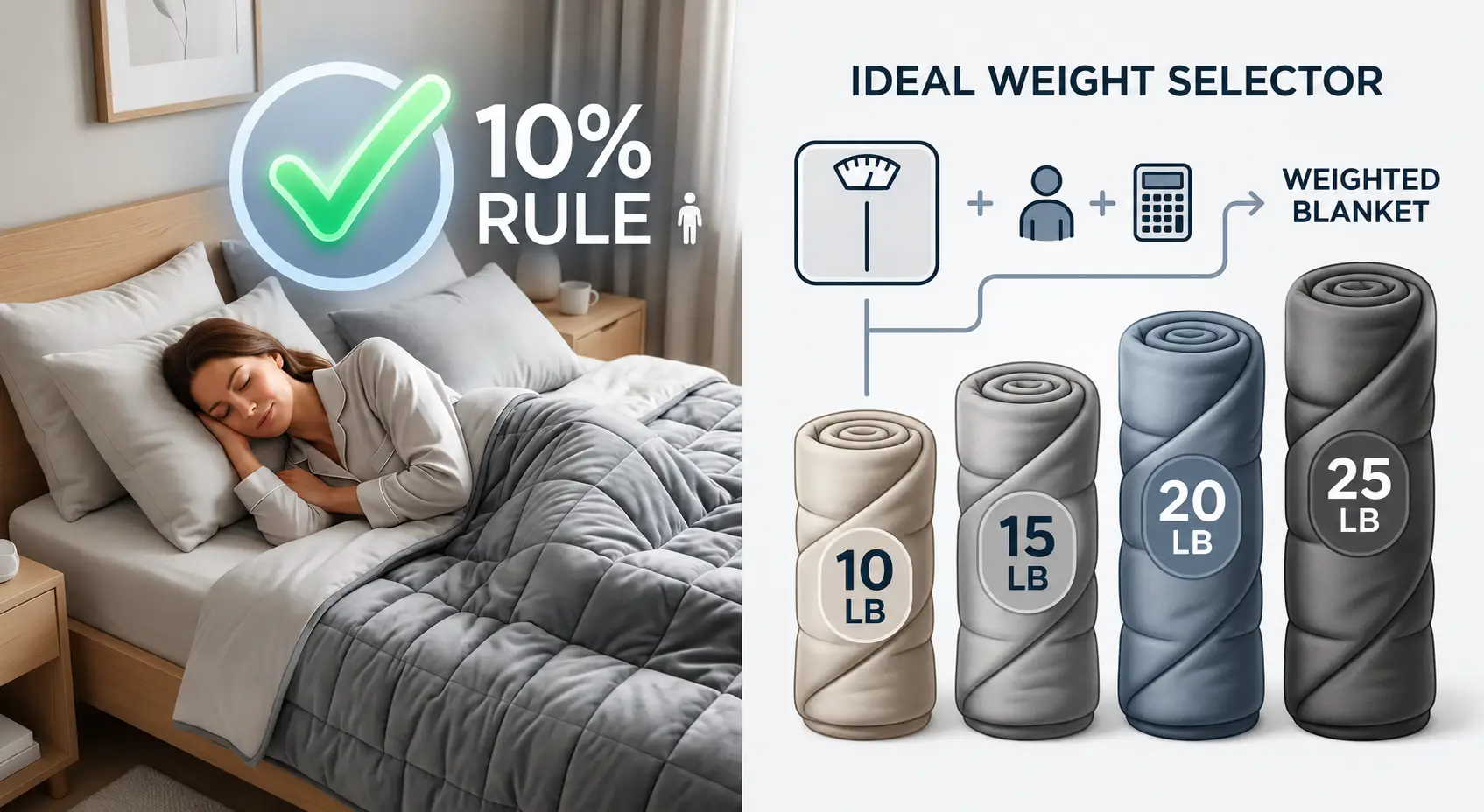
Follow the 10% rule. The blanket should weigh about 10% of your child’s body weight, plus one to two pounds at most. So a 50-pound child does well with a 5 to 6 pound blanket. Heavier is not better. If you’re between sizes, size down.
Your child must be able to remove the blanket on their own. This is the single most important test. If they can’t easily push it off or climb out from under it, the blanket is too heavy for them, full stop.
Skip it entirely if your child has certain health conditions. That includes sleep apnea, asthma or other breathing problems, and circulatory issues. When in doubt, ask your pediatrician first. That’s not legal boilerplate. It’s genuinely the right move, especially for kids with medical or developmental conditions.
Buy kid-sized, not adult-sized. An adult blanket draped over a small bed hangs off the edges, drags weight to the floor, and can tangle. Look for sizes around 36 x 48 inches for younger kids or 41 x 60 inches for bigger kids.
With that out of the way, here are the blankets that actually earn a spot on your child’s bed.
The 6 Best Weighted Blankets for Kids in 2026
| Blanket | Best For | Weight Options | Fill Type | Price Range |
|---|---|---|---|---|
| Bearaby Nappling | Best overall | 5 or 7 lbs (8 lb version available) | No beads, knit fabric | Around $199 |
| Dreamland Baby Toddler Blanket | Toddlers and preschoolers | 4 lbs | Glass beads | Under $100 |
| ZonLi Kids Weighted Blanket | Best budget | 3 to 7 lbs | Glass beads | $29 to $59 |
| Silk & Snow Knit Weighted Blanket | Older kids and tweens | 12 lbs and up | No beads, cotton knit | $150 and up |
| Luna Kids Bamboo Weighted Blanket | Hot sleepers | 5 to 9 lbs | Glass beads | Under $80 |
| SensaCalm Junior | Sensory needs | Custom | Glass beads | Varies by build |
1. Bearaby Nappling: Best Overall
Bearaby only makes weighted blankets, and it shows. The Nappling is the brand’s kid-specific version, a chunky hand-knit throw made from organic cotton in weights of around 5 to 7 pounds, with an 8-pound option for bigger kids.
What makes it different is the construction. There are no beads or pellets inside. The thick knitted yarn itself provides the weight, which means the pressure spreads evenly across your child’s body and there’s nothing to leak, clump, or shift to one corner. The open-knit design also lets air circulate, so kids who sleep hot stay comfortable, which is a common complaint with bead-filled blankets.
Bearaby recommends it for children between 4 and 14, and it’s machine washable, which matters when the blanket inevitably meets juice, mud, or worse. Just wash it on its own.
Pros:
- Even pressure with no beads to shift or leak
- Breathable knit that doesn’t trap heat
- Organic cotton, machine washable
- Kid-appropriate size and weight options
Cons:
- Around $199, so it’s a real investment
- The open knit can snag little fingers and toes
- Chunky loops can catch on velcro or zippers in the wash
Who should buy it: Parents who want the safest, most breathable design and plan to use it for years.
Who should skip it: Anyone on a tight budget, or parents of kids who pick at loose loops.
2. Dreamland Baby Weighted Toddler Blanket: Best for Younger Kids
Don’t let the brand name confuse you. This blanket is not for babies, and the company is clear about that. At 4 pounds, it’s built for toddlers and preschoolers who have outgrown the crib and meet the age and weight guidelines above.
The design is smart for the age group. One side is soft microfleece, and the other is a plush fabric designed to run cooler, so you can flip it with the seasons. The 4-pound weight suits kids in the 35 to 50 pound range, which covers most 3 to 6 year olds.
One reminder for this age group: use it under supervision, keep it for wind-down time and story time rather than unsupervised overnight sleep, and check with your pediatrician first. That’s standard guidance for any weighted blanket at this age, not a knock on this product.
Pros:
- Appropriately light for small kids
- Two fabric textures in one blanket
- Reasonably priced
- Sized correctly for toddler beds
Cons:
- Kids outgrow the 4-pound weight fairly quickly
- Fleece side can run warm in summer
Who should buy it: Parents of preschoolers who want a properly sized starter blanket.
Who should skip it: Families with kids over 50 pounds, who need more weight to feel the effect.
3. ZonLi Kids Weighted Blanket: Best Budget Pick
Not every family wants to spend $200 to find out whether their child even likes sleeping under weight. That’s where ZonLi comes in. Depending on the size and weight you choose, it runs about $29 to $59, which makes it the cheapest way to test the waters.
It uses fine glass beads sewn into small quilted pockets to keep the weight from pooling, with a cotton cover that breathes reasonably well. The build quality won’t match the premium knit blankets, but for the price, it holds up better than it has any right to. It comes in several kid-friendly weights, so you can follow the 10% rule instead of forcing one weight to fit every child.
Pros:
- Very affordable
- Multiple weights, so you can match your child’s size
- Cotton cover breathes better than cheap polyester
- Easy to replace as your child grows
Cons:
- Beads can shift more than in premium designs
- Stitching is the weak point after many washes
- Fewer color and cover options
Who should buy it: Anyone trying a weighted blanket for the first time without a big commitment.
Who should skip it: Parents who want a buy-it-once blanket that lasts through the teen years.
4. Silk & Snow Knit Weighted Blanket: Best for Big Kids and Tweens
Once your child passes 100 pounds or so, most kids’ blankets stop making sense. The Silk & Snow Knit Weighted Blanket bridges the gap. Like the Bearaby, it’s a hand-knitted cotton design with no beads, built from thick cotton yarns in an open knit that circulates air while keeping that heavy, grounding feel.
Its lightest version is around 12 pounds, which fits kids in the 110 to 130 pound range. That makes it a poor choice for young children but a great one for tweens and teens who have outgrown a 7-pound blanket and complain that everything else sleeps hot.
Pros:
- Very breathable for a weighted blanket
- Even, bead-free weight distribution
- Grows with your child into the teen years
- Looks like a stylish throw, not a therapy product
Cons:
- Too heavy for younger or smaller kids
- Premium price
- Knit construction needs gentle washing
Who should buy it: Parents of tweens and teens, especially hot sleepers.
Who should skip it: Anyone shopping for a child under about 100 pounds.
5. Luna Kids Bamboo Weighted Blanket: Best for Hot Sleepers on a Budget
If your child kicks off every blanket by midnight because they overheat, fabric matters as much as weight. Luna’s kids’ version pairs a bamboo-derived viscose cover with fine glass beads, and bamboo viscose is one of the coolest-feeling fabrics you can put on a bed. It wicks moisture and feels smooth and cold to the touch.
It comes in kid-appropriate weights starting around 5 pounds, in a proper kids’ size, at a price well under the premium knit options. Reviewers consistently call out how cool it sleeps compared to fleece or minky-covered competitors.
Pros:
- Bamboo viscose cover sleeps noticeably cool
- Kid-appropriate weights and sizes
- Good middle ground on price
- Quilted pockets keep beads in place
Cons:
- Viscose is thinner and less durable than knit cotton
- Some kids miss the fuzzy, plush feel
Who should buy it: Sweaty sleepers and warm climates.
Who should skip it: Kids who specifically love a fuzzy, plush texture against their skin.
6. SensaCalm Junior: Best for Sensory Needs
For children with autism, ADHD, or sensory processing differences, off-the-shelf often isn’t good enough. Some kids need a specific weight that no standard chart predicts, a particular texture, or a size matched to their body rather than a bed. SensaCalm builds its Junior blankets to order, with custom weights and fabric choices including the minky texture many sensory-seeking kids love.
One important note here: for kids with sensory or developmental conditions, the right blanket weight should really come from a licensed occupational therapist rather than the 10% formula. An OT can also tell you whether a weighted blanket helps at all, because some kids with ADHD actually find the weight overstimulating. Response varies child to child.
Pros:
- Custom weight, size, and fabric
- Minky option for sensory seekers
- Made specifically for therapeutic use
Cons:
- Costs more than standard options
- Made-to-order means a wait
- Overkill for kids without specific sensory needs
Who should buy it: Families working with an OT who need something specific.
Who should skip it: Parents who just want general bedtime help. A standard pick will do the job for less.
How to Choose the Right Weight: Quick Chart
Use your child’s current weight, not the weight you expect them to reach.
| Child’s Weight | Blanket Weight |
|---|---|
| 30 to 40 lbs | 3 to 4 lbs |
| 40 to 50 lbs | 4 to 5 lbs |
| 50 to 70 lbs | 5 to 7 lbs |
| 70 to 90 lbs | 7 to 9 lbs |
| 90 to 120 lbs | 9 to 12 lbs |
If your child is new to weighted blankets or sleeps hot, start at the lighter end of their range. And give it time. Most kids need a week or two to adjust before the blanket starts feeling comforting rather than strange.
Glass Beads vs. Knit Weight: Which Is Better?
Both work. They just feel different.
Bead-filled blankets (ZonLi, Luna, Dreamland Baby, SensaCalm) cost less and come in more weights, but the beads can shift over time, and the quilted layers trap more heat. Look for small, tightly stitched pockets to minimize shifting.
Knitted blankets (Bearaby, Silk & Snow) spread weight perfectly evenly, breathe far better, and have nothing inside to leak. The trade-offs are price and the open loops, which can snag.
For a child who sleeps hot or chews and picks at fabric seams, knit is worth the extra money. For a first blanket or a tight budget, beads are fine.
When a Weighted Blanket Isn’t the Answer
Honesty time: a weighted blanket is a tool, not a cure. It can help a child settle faster and feel more secure, and many families notice a real difference. But it won’t fix a bedtime routine that starts too late, a tablet in the bedroom, or an underlying sleep disorder. If your child snores loudly, gasps at night, or seems exhausted despite a full night in bed, talk to your pediatrician before spending money on bedding.
FAQ
What age is safe for a weighted blanket?
Never under age 2, and most guidance says wait until at least 3 or 4. Between ages 3 and 6, use it only with supervision and your pediatrician’s okay. Some pediatric sources recommend age 7 and up for regular, unsupervised overnight use.
How heavy should a weighted blanket be for a child?
About 10% of your child’s body weight, plus one to two pounds at most. A 50-pound child needs roughly a 5 to 6 pound blanket. If your child can’t easily remove it themselves, it’s too heavy no matter what the math says.
Do weighted blankets actually help kids sleep?
Many kids sleep better under one, and the deep pressure is thought to promote calm by working like a firm hug. That said, results vary. Some children love it immediately, some need a week or two to adjust, and a few never take to it. Buy from a brand with a decent return window.
Are weighted blankets good for kids with ADHD or autism?
They can be. Occupational therapists have used deep pressure with sensory-sensitive kids for years, and many parents report calmer evenings. But responses differ, and some kids find the weight overstimulating. For a child with a diagnosed condition, get input from an OT before buying.
Can two kids share one weighted blanket?
No. The weight needs to match each child’s body. And never let a small child sleep under an adult’s weighted blanket, which can easily be three or four times the safe weight for their size.
Are weighted blankets hot?
Bead-filled ones with fleece or minky covers can be. If your child sleeps warm, choose an open-knit cotton design like the Bearaby Nappling or a bamboo viscose cover like the Luna.
The Bottom Line
For most families, the Bearaby Nappling is the best weighted blanket for kids in 2026. It’s breathable, evenly weighted, bead-free, and built to survive years of washing. If the price stings, the ZonLi Kids Weighted Blanket delivers the core benefit for a fraction of the cost, and the Dreamland Baby blanket is the right starting point for the preschool crowd.
Whichever you choose, get the weight right, make sure your child can remove it on their own, and check with your pediatrician if you have any doubt. A weighted blanket should feel like a hug, not a burden.