

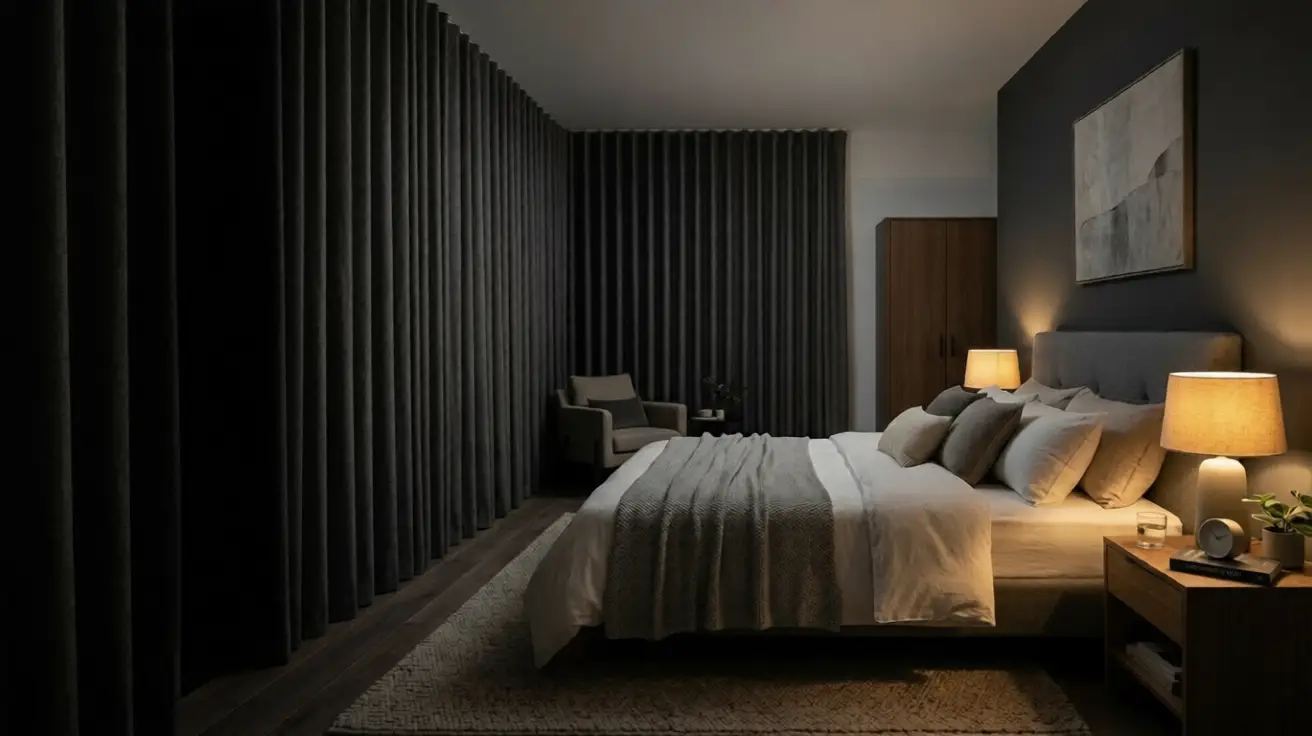
Here’s the uncomfortable truth about blackout curtains: there’s no industry standard for the word “blackout.” Any manufacturer can print it on the package, and plenty of them do, even when the fabric lets a soft glow through at noon and light pours in around the edges at sunrise.
So before spending money on another pair that disappoints, it helps to know what actually works. We dug through independent testing from Wirecutter, CNN Underscored, Forbes Vetted, and Apartment Therapy, cross-checked brand claims against real user reviews, and narrowed the field to seven curtains that genuinely earn the name in 2026.
One quick note on honesty: even the best blackout curtains block light through the fabric, not around it. Light still sneaks over the top of the rod and along the sides unless you install them correctly. We’ll cover exactly how to fix that near the end, because installation matters almost as much as the curtain itself.
Quick Comparison
| Curtain | Best For | Starting Price | Light Blocking |
| Sun Zero Oslo Theater-Grade | Best overall | ~$37 | ~100% through fabric |
| Nicetown Lined Blackout | Best tested performance | ~$30/pair | Near total |
| IKEA Rosenmandel | Best budget | $20–$25/pair | Near total |
| Sleepout | Nurseries & renters | $149 | 100% |
| Quince European Linen Blackout | Best natural fabric | $60 | Very high |
| West Elm Worn Velvet | Best premium look | $150+ | Very high |
| Pottery Barn Blackout Liner | Upgrading existing curtains | ~$60 | Adds strong darkening |
1. Sun Zero Oslo Theater-Grade Blackout Curtains: Best Overall
Sun Zero’s Oslo line keeps winning best-overall spots across major testing publications, and for good reason. The panels use a dense 340 GSM woven lining, which is the kind of weight you’d normally find in home theater installations, not a $37 curtain.
In practice, that heavy weave means essentially no light passes through the fabric itself, even in direct afternoon sun. The weight also does double duty. Sun Zero claims up to 35% noise reduction and meaningful insulation, and while brand numbers always deserve a grain of salt, testers consistently notice quieter, more temperature-stable rooms with these installed.
Pros: Theater-grade darkness at a mid-range price, 16 color options, solid noise and thermal performance.
Cons: Rod pocket hanging style only on some sizes, and the heavy fabric needs a sturdy rod.
Who should buy it: Anyone who wants the best darkness-per-dollar ratio without going custom.
Who should skip it: People who prefer grommet-top curtains or want a natural fabric look.
2. Nicetown Contemporary Lined Blackout Curtains: Best Tested Performance
When CNN Underscored put five popular blackout curtains through days of real-world testing, the Nicetown lined panels came out on top for completely blocking sunlight, including over a large sliding glass door. That’s a harder test than a standard bedroom window.
Nicetown has quietly become the default blackout brand on Amazon, with its triple-weave polyester and sewn-in black liner racking up tens of thousands of five-star reviews. The 52 x 84 inch panels hang easily, drape nicely, and don’t look like the stiff vinyl-backed curtains of a decade ago.
Pros: Proven in independent testing, huge color selection, handles large openings well.
Cons: Polyester feel won’t please everyone, and lighter colors block slightly less than the lined dark shades.
Who should buy it: Shift workers and anyone covering wide windows or glass doors.
Who should skip it: Buyers who want certified nontoxic materials for a baby’s room (see Sleepout below).
3. IKEA Rosenmandel: Best Budget Pick
At $20 to $25 per pair, the Rosenmandel shouldn’t be this good. Wirecutter found it was one of only two curtains in its entire testing pool that blocked nearly all light through the fabric, thanks to a matte woven polyester with a polyurethane coating.
The trade-off is IKEA’s limited color range and the usual IKEA sizing quirks. But if your goal is a dark bedroom for the price of a takeout dinner, nothing else on this list comes close.
Pros: Unbeatable price, genuinely near-total fabric blackout, understated matte look.
Cons: Few colors, may need hemming, availability depends on your local IKEA or shipping costs.
Who should buy it: Students, renters, and anyone furnishing multiple rooms on a budget.
Who should skip it: Anyone who needs custom sizing or specific colors to match a decor scheme.
4. Sleepout Blackout Curtains: Best for Nurseries and Renters
Sleepout takes a different approach. Instead of hanging from a rod, these panels attach with suction cups directly to the window, which solves the edge-leak problem that plagues every rod-hung curtain. Cover the glass completely and the room goes truly dark, not just dim.
They’re also the rare blackout curtains holding both OEKO-TEX Class I certification (safe for baby skin contact) and GreenGuard Gold, with no PFAS. The portable version travels well, which is why they’ve become a favorite of parents dealing with hotel-room naps.
Pros: True 100% blackout when mounted on the glass, top-tier safety certifications, portable, custom sizes available.
Cons: At $149 and up, they cost several times more than rod-hung options, and suction mounting isn’t as decorative.
Who should buy it: Parents, extreme light-sensitive sleepers, night-shift workers, and frequent travelers.
Who should skip it: Anyone who mainly wants curtains as a design element.
5. Quince European Linen Blackout Curtains: Best Natural Fabric
Most true blackout curtains are polyester because synthetics weave tightly enough to stop light. Quince splits the difference: a natural European linen face with a separate blackout lining sewn behind it. You get the relaxed, textured linen look that dominates 2026 interiors, with serious darkening underneath.
Starting around $60, they undercut most linen blackout competitors by half or more, which is Quince’s whole business model.
Pros: Real linen at a fair price, strong light blocking from the lining, elevated look.
Cons: Not absolute 100% blackout, linen wrinkles and needs steaming out of the box.
Who should buy it: Design-conscious sleepers who refuse to hang shiny polyester in their bedroom.
Who should skip it: Anyone chasing pitch-black darkness above all else.
6. West Elm Worn Velvet Blackout Curtains: Best Premium Option
Velvet is naturally dense, so it blocks light and absorbs sound better than almost any other decorative fabric. West Elm’s Worn Velvet panels pair that density with a blackout lining, and the result feels closer to a boutique hotel than a bedroom.
Forbes Vetted named these its top premium pick, and the appeal is obvious: rich color depth, substantial drape, and noticeably quieter rooms. You pay for it, but these are curtains you buy once and keep for a decade.
Pros: Gorgeous, excellent light and sound blocking, durable.
Cons: Expensive, heavy (use strong hardware), velvet attracts dust and pet hair.
Who should buy it: Anyone furnishing a primary bedroom or media room for the long haul.
Who should skip it: Budget shoppers and households with shedding pets.
7. Pottery Barn Universal Blackout Curtain Liner: Best for Curtains You Already Own
If you love your current curtains and just want them to work harder, a liner is the cheapest path. Pottery Barn’s universal liner clips behind existing panels using the nine included hooks and works with grommet and tab-top styles.
It won’t match a purpose-built blackout curtain, but it turns sheer or decorative panels into genuinely room-darkening ones for far less than replacing everything.
Pros: Keeps your existing look, easy install, works with most hanging styles.
Cons: Darkens rather than blacks out, adds bulk behind lighter curtains.
Who should buy it: Anyone happy with their curtains’ appearance but not their performance.
Who should skip it: People starting from scratch, who’ll get better results buying blackout panels outright.
How to Actually Get a Dark Room (The Part Most Guides Skip)
Even a 100% blackout fabric can’t stop light that goes around it. Three fixes make a bigger difference than upgrading the curtain:
- Mount wide and high. Extend the rod 8 to 12 inches past each side of the window and several inches above the frame. Light travels in straight lines, so overlap kills most leaks.
- Use a wraparound rod. These curve back to the wall at each end, closing the side gaps that standard rods leave open. It’s a $20 fix that solves the 6 a.m. light beam.
- Close the top gap. Rod pocket and back-tab styles sit closer to the wall than grommets. A valance or a rod mounted near the ceiling blocks the glow that spills over the top.
If you do all three and still see light, that’s when a sealed track shade or a glass-mounted option like Sleepout becomes worth the extra money.
What to Look For When Buying
Fabric weight and construction. Triple-weave polyester or a sewn-in black liner beats a sprayed coating for both darkness and durability. Heavier GSM numbers generally mean better blocking.
Color honesty. Dark colors usually block a bit more, but a well-lined white curtain can outperform a cheap black one. The liner matters more than the face color.
Sizing. Order panels at least twice the width of your window for proper fullness, and measure length before buying. Nothing leaks light like a curtain that’s two inches too narrow.
Certifications for kids’ rooms. Look for OEKO-TEX Class I or GreenGuard Gold if the curtains are going in a nursery, since some cheap blackout backings off-gas for days.
Frequently Asked Questions
Do blackout curtains really block 100% of light?
Through the fabric, the best ones come close or hit 100%. Around the edges, no rod-hung curtain can seal completely. For true pitch darkness, mount curtains wide and high, use a wraparound rod, or choose a glass-mounted or sealed-track option.
Are blackout curtains worth it for energy savings?
Yes, modestly. The dense fabric insulates windows, holding heat in winter and keeping cooled air in during summer. Sun Zero claims up to 50% less energy loss through covered windows. Real-world savings vary, but drafty single-pane windows benefit most.
What’s the difference between blackout and room-darkening curtains?
There’s no regulated standard, which is the problem. In practice, room-darkening curtains block most light but leave a visible glow, while true blackout curtains stop nearly all light passing through the fabric. Check reviews and testing rather than trusting the label.
Which blackout curtain is best for a nursery?
Sleepout is the strongest choice. It blocks 100% of light when mounted on the glass and carries OEKO-TEX Class I certification, meaning the fabric is tested safe for babies to touch. The portable version also handles travel naps.
Do I need special hardware for blackout curtains?
Usually just a sturdy rod, since lined and velvet panels are heavy. A wraparound rod is worth the small upgrade because it closes the side gaps where most light enters.
Final Verdict
For most bedrooms, the Sun Zero Oslo is the pick: theater-grade darkness, real noise reduction, and a price under $40. If you’re pinching pennies, the IKEA Rosenmandel delivers 90% of that performance for half the cost. And if you need absolute, wake-up-at-noon-confused darkness for a nursery or shift-work schedule, spend up on Sleepout, because it’s the only option here that solves the edge-leak problem instead of just softening it.
Whatever you choose, install it wide, high, and with a wraparound rod. The cheapest curtain hung correctly beats the most expensive one hung wrong.