

Confused between cotton, linen, and bamboo bed sheets? Here’s an honest comparison of the best bed sheets in 2026: what each material actually feels like, who it’s best for, and what’s worth buying.
You spend roughly a third of your life in bed. So why do most people spend more time picking a Netflix show than choosing their sheets?
It’s one of those things you don’t think about until you’ve slept on really good sheets and then suddenly you can’t go back. Whether you run hot at night, have sensitive skin, or just want that crisp hotel-bed feel at home, the material matters more than most people realise.
Right now, the three most talked-about options are cotton, linen, and bamboo. Each has its fans, each has its quirks, and none of them is right for everyone. Here’s the honest breakdown.
Why Material Matters More Than Thread Count
Thread count gets thrown around a lot in bedding marketing, and it’s mostly a distraction.
A 400-thread-count cotton sheet can feel incredible. A 1000-thread-count sheet made from cheap, short-staple fibres can feel scratchy and stiff. What actually determines how a sheet feels and how long it lasts is the material itself and the quality of its weave.
So before you start comparing numbers, let’s talk about what you’re actually sleeping on.
Cotton Bed Sheets: The Classic That Never Really Goes Away
There’s a reason cotton has dominated bedroom linen for decades. It’s familiar, it’s reliable, and it just works for most people.
Good cotton sheets start a little crisp and get softer every single time you wash them. If you’ve ever pulled a well-worn cotton sheet set out of a cupboard and thought “these feel amazing” that’s why. Cotton improves with age.
Types of Cotton Worth Knowing
Not all cotton is created equal. Here’s what you’ll likely see on labels:
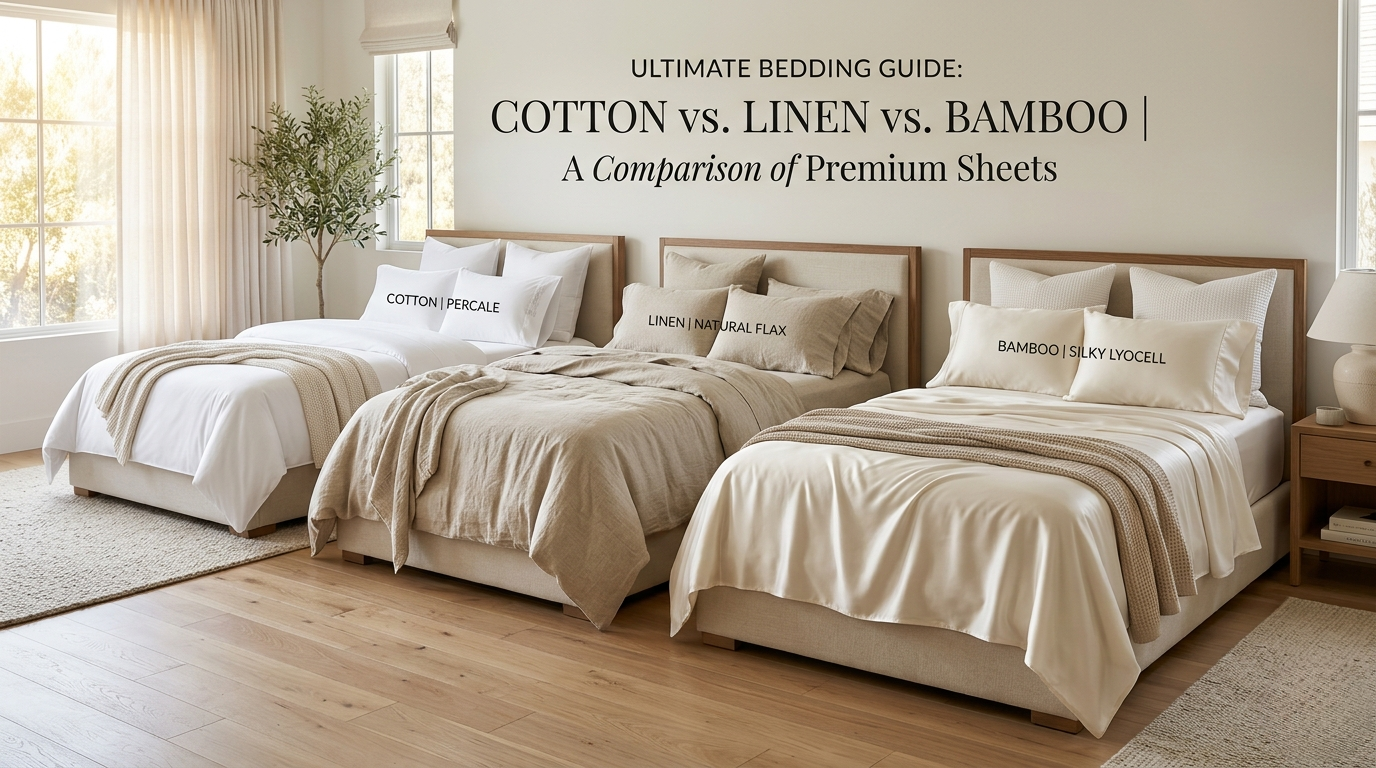
- Percale – Tightly woven, crisp, and cool. Feels like a freshly ironed shirt. Great for summer or anyone who sleeps warm.
- Sateen – Silkier finish, slightly warmer feel. Has a subtle sheen. More of a year-round or winter option.
- Egyptian Cotton – Made from long-staple fibres, which means it’s stronger and softer than regular cotton. Often pricier, but genuinely worth it.
- Organic Cotton – Same feel as regular cotton, but grown without pesticides. Better for sensitive skin and the environment.
Who Cotton Is Best For
Honestly? Most people. If you want a dependable, breathable, easy-to-care-for sheet that you can throw in the machine and forget about, cotton is still the safest pick.
It’s also the most widely available and tends to hit every price point from budget-friendly to genuinely luxurious.
The catch: Cotton wrinkles. Easily. If you hate making your bed look like a tornado went through it, you’ll either be ironing a lot or just… not caring.
Linen Bed Sheets: Rough at First, Worth It Later
Linen has had a serious moment over the past few years, and for good reason. But it also comes with an asterisk.
If you grab a brand-new set of linen sheets and crawl into bed expecting something soft, you might be disappointed. Linen is textured. It has a somewhat rough, almost rustic feel straight out of the packet. Some people love it immediately. Others need a few washes to warm up to it.
Here’s the thing, though linen softens beautifully over time and eventually becomes one of the most comfortable materials you can sleep on. It also gets better with age in a way that cotton can’t quite match. Well-cared-for linen sheets can literally last decades.
What Makes Linen Different
Linen comes from the flax plant and has a naturally loose weave that allows air to circulate through it constantly. That means it’s incredibly breathable possibly the most breathable sheet material available.
It’s also naturally moisture-wicking and temperature-regulating, which makes it a favourite for people who live in warmer climates or tend to sleep hot. And unlike some materials, it actually works in both directions keeping you cool in summer and warm enough in winter.
On top of that, it’s eco-friendly. Flax requires less water and fewer chemicals to grow compared to conventional cotton.
Which Linen Is Best For
Hot sleepers, people who live in warm or humid climates, and anyone who prefers that relaxed, slightly undone aesthetic in their bedroom. Linen has a look to it effortless, lived-in, a bit European that a lot of people are into.
The catch: Price. Good linen sheets aren’t cheap. And they wrinkle even more than cotton like, noticeably. If a tidy-looking bed matters to you, linen might test your patience.
Bamboo Bed Sheets: The Newcomer That’s Earned Its Spot
Bamboo has gone from “trendy alternative” to a genuine contender in the bedding space, and the hype is mostly justified. It’s worth breaking down because the feel, the eco story, and the care routine all matter.
The feel is unlike cotton or linen. It’s soft and smooth in a way that’s almost silky not slippery like satin, but genuinely luxurious against the skin. First-time bamboo converts often describe it as the softest thing they’ve ever slept on.
Beyond softness, bamboo’s standout quality is temperature regulation. The natural microstructure of bamboo fibres allows air to pass through easily, pulling heat and moisture away from your body while you sleep. For anyone who wakes up in a sweat or constantly kicks blankets off at night, this can genuinely change things.
The Eco Question
Bamboo itself is one of the most sustainable plants on the planet it grows incredibly fast, needs no pesticides, and doesn’t require much water. That part is real.
What’s less straightforward is how the bamboo gets turned into fabric. The most common method (viscose/rayon) involves chemical processing that isn’t particularly clean. Lyocell bamboo uses a closed-loop process that’s much more eco-friendly, but it’s less common and tends to cost more. If sustainability is important to you, it’s worth reading the label.
Bamboo Is Also Hypoallergenic
This is a genuine benefit, not just marketing. Bamboo fibres naturally resist dust mites, mould, and bacteria. If you have allergies, eczema, or sensitive skin, bamboo sheets can make a noticeable difference.
Who Bamboo Is Best For
Hot sleepers, people with sensitive or allergy-prone skin, and anyone who wants that hotel-luxury feel without the hotel price tag. Bamboo sheets do tend to cost more than basic cotton, but top-rated sets like Cozy Earth and LUXOME are regularly cited as worth every penny by people who’ve made the switch.
The catch: Care instructions matter. Many bamboo sheets require cold-water washing and can’t handle high heat in the dryer. If you’re a “throw everything in hot and hope for the best” laundry person, bamboo might not be ideal.
Cotton vs Linen vs Bamboo: Quick Comparison
| Feature | Cotton | Linen | Bamboo |
| Softness | Gets softer over time | Rough at first, improves with age | Soft immediately |
| Breathability | Good | Excellent | Excellent |
| Temperature Regulation | Moderate | Very good | Very good |
| Moisture Wicking | Moderate | Good | Very good |
| Durability | Good | Outstanding | Good |
| Eco-Friendly | Moderate (organic is better) | Very good | Good (depends on processing) |
| Wrinkle Resistance | Low | Very low | Moderate |
| Price Range | Budget to premium | Mid to high | Mid to premium |
| Best For | Everyone, everyday use | Hot sleepers, warm climates | Hot sleepers, sensitive skin |
Which Should You Actually Buy?
It depends on what’s annoying you about sleep right now.
If you wake up sweaty or hot: Go bamboo first, linen second. Both are genuinely better than cotton at moving heat away from your body.
If you just want reliable, easy-care sheets: Cotton percale is still unbeatable for most people. Buy once, wash regularly, enjoy for years.
If you want longevity and don’t mind the initial texture, linen is the long-game choice. The investment pays off over time.
If you have sensitive skin or allergies: Bamboo. The hypoallergenic properties are real, and the smooth texture tends to be gentler than cotton or linen on reactive skin.
If the budget is tight, cotton gives you the most options at the lowest price without sacrificing much comfort.
A Few Things to Check Before You Buy
Regardless of the material you choose, here are a few buying criteria to consider: breathability, feel, wrinkle resistance, durability, care needs, price, and whether the sheet suits hot sleepers or those with sensitive skin.
- Certifications matter. For cotton, look for GOTS (organic) or Oeko-Tex Standard 100. For bamboo, Oeko-Tex or USDA Organic bamboo certifications signal cleaner processing. If you’re weighing options, use these certifications as part of your buying criteria.
- Fit your mattress depth. Fitted sheets often shrink after washing. Buy a set rated for 2–3 inches deeper than your actual mattress. Mattress fit should be one of your first buying criteria, especially if you want a secure, stay-put fit.
- Read the care label. Bamboo especially needs gentle washing. Linen can handle more, but hot dryers are still not ideal. Care requirements should be part of your buying criteria if you want sheets that match your laundry routine.
- Buy three sets. One on the bed, one in the wash, one spare. You’ll thank yourself later.
Final Thoughts
There’s no one “best” sheet material; it really does come down to how you sleep and what you care about.
Cotton is timeless for a reason. Linen rewards patience. Bamboo is the easiest upgrade for anyone who runs warm or has sensitive skin. All three are genuinely good options, but if you want the simplest final take: choose cotton for reliability, linen for longevity, and bamboo for softness and cooling. Any of them will beat cheap polyester every single time.
Pick the one that solves your biggest sleep complaint, spend a little more than you think you need to, and wash them before the first use. That’s the whole formula.
Frequently Asked Questions
Are bamboo sheets better than cotton?
For hot sleepers or people with sensitive skin, yes bamboo tends to be softer, more moisture-wicking, and better at regulating temperature. For general everyday use, high-quality cotton is still hard to beat.
Do linen sheets feel scratchy?
They can feel rough initially, especially brand new. But linen softens significantly after several washes and eventually becomes one of the most comfortable materials available.
What thread count should I look for in cotton sheets?
Somewhere between 300 and 500 is the sweet spot for most cotton sheets. Beyond 600, thread count often doesn’t meaningfully improve quality and can actually reduce breathability.
Are bamboo sheets actually eco-friendly?
Bamboo is a very sustainable plant. However, how it’s processed into fabric varies lyocell bamboo is the most eco-friendly option, while viscose/rayon involves more chemical processing.
How often should you wash bed sheets?
Every one to two weeks is the general recommendation, though once a week is better if you sweat in your sleep or share the bed with pets.
Can you put bamboo sheets in the dryer?
Most bamboo sheets can go in the dryer on a low heat setting, but check the specific care label. High heat can break down bamboo fibres over time, causing shrinkage.