
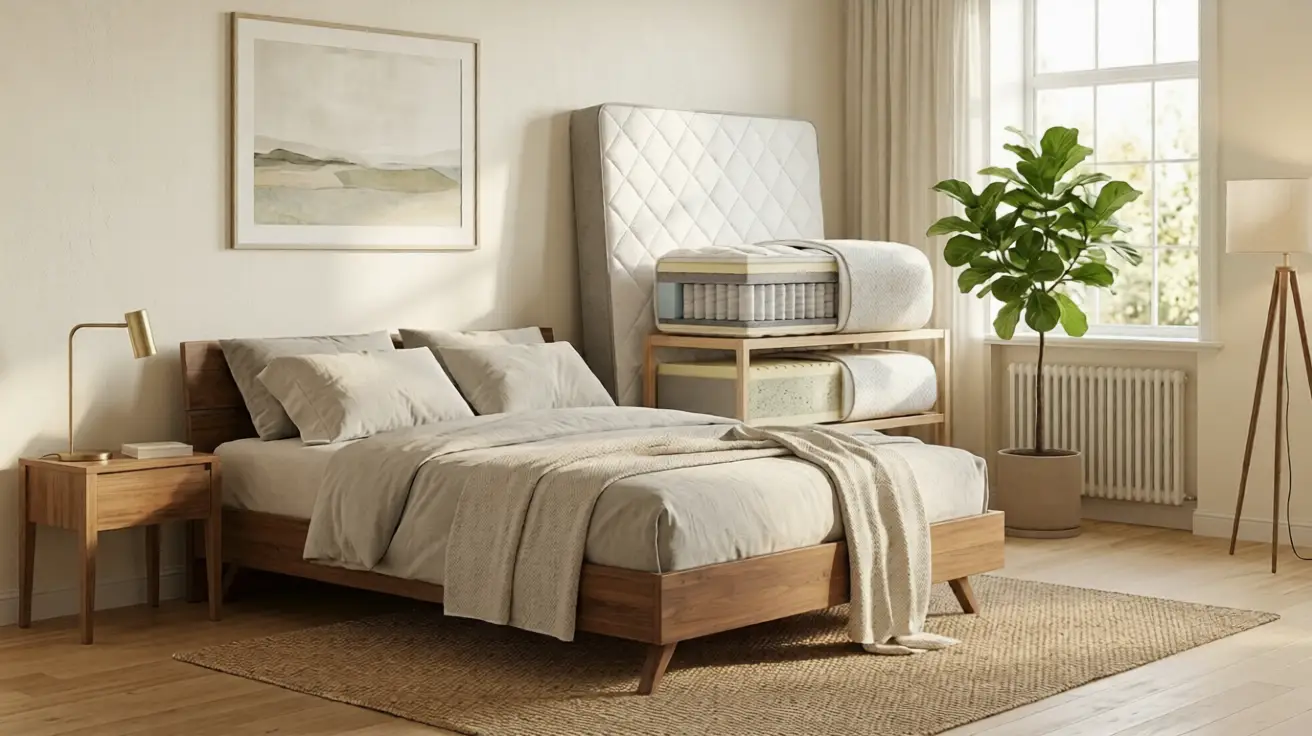

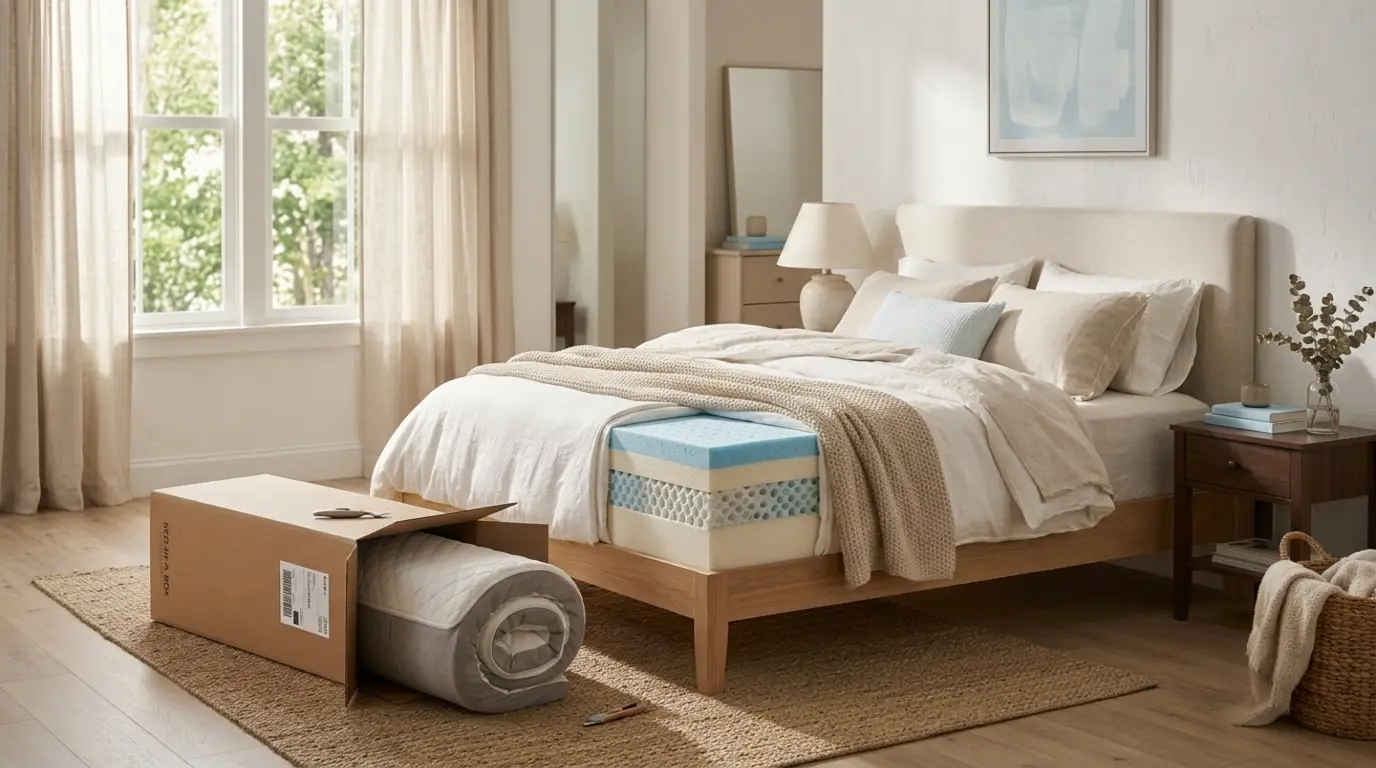
Buying a mattress used to mean an awkward Saturday at a showroom, lying on beds while a salesperson hovered nearby. Now a compressed queen-size mattress shows up at your door in a box you can roll down the hallway, and most brands give you months to test it at home before you commit.
The catch? There are hundreds of boxed mattresses online, and they all claim to be the answer to your sleep problems. They’re not. Some sleep hot, some sag within a year, and some are simply wrong for how you sleep.
To narrow things down, we dug into lab test data, expert reviews, and real owner feedback from sleepers of all body types and positions. These seven picks stood out in 2026, each for a different kind of sleeper.
Our 7 Picks at a Glance
| Mattress | Best For | Type | Firmness | Queen Price Range* |
| Helix Midnight Luxe | Overall | Hybrid | Medium-firm | $$$ |
| Nectar Classic | Value | Memory foam | Medium-firm | $ |
| Nolah Evolution 15 | Side sleepers | Hybrid | Medium (zoned) | $$$ |
| DreamCloud Hybrid | Back & stomach sleepers | Hybrid | Firm-leaning | $$ |
| Brooklyn Bedding Aurora Luxe | Hot sleepers | Hybrid | Soft, medium, or firm | $$$ |
| Plank Firm | Firm mattress fans | Foam (flippable) | Firm / extra firm | $$ |
| Helix Plus | Bigger bodies | Hybrid | Firm | $$$ |
*Prices shift constantly with sales. $ = typically under $1,000, $$ = roughly $1,000–$1,400, $$$ = $1,400 and up for a queen before discounts.
1. Helix Midnight Luxe: Best Overall
If one boxed mattress keeps landing at the top of independent test labs year after year, it’s this one. The Midnight Luxe is a medium-firm hybrid that blends contouring foam over pocketed coils, and that combination hits the sweet spot for the widest range of sleepers.
Testers consistently praise how balanced it feels. The foam layers cradle your shoulders and hips enough to relieve pressure, while the coil base keeps your spine from bowing. Couples like it too, since it scores well for both motion isolation and edge support, two things all-foam beds often struggle with.
Helix also offers an optional ErgoAlign layer with extra-firm foam under the hips, which is worth considering if you deal with lower back pain.
Pros: Balanced medium-firm feel that suits most positions, strong pressure relief, solid edge support, breathable pillow-top cover.
Cons: Pricier than average, and heavy to move once expanded.
Buy it if: You want a safe, crowd-pleasing pick, share a bed, or switch positions during the night.
Skip it if: You’re on a tight budget or want a distinctly soft or extra-firm feel.
2. Nectar Classic: Best Value
You’ll struggle to find a better deal in the boxed mattress world. The Nectar Classic is an all-foam bed that regularly sells for under $1,000 in a queen, and it doesn’t feel like a budget compromise.
Its three foam layers deliver the classic memory foam experience: a slow, cushiony hug that eases pressure on your shoulders and hips. Motion isolation is where it really shines. If your partner tosses and turns, you’ll barely notice. Side sleepers over 130 pounds tend to get the most out of it, since the top layer contours without letting them sink through.
Then there are the policies. Nectar gives you a 365-night trial, a lifetime warranty, and free shipping. A full year to test a mattress at home removes most of the risk from buying online.
Pros: Excellent price, standout motion isolation, generous year-long trial, lifetime warranty.
Cons: Foam feel isn’t bouncy, so it can feel slow to move around on. Not the coolest-sleeping bed either.
Buy it if: You want the most mattress for your money, sleep on your side, or share a bed with a restless partner.
Skip it if: You sleep hot, prefer a springy surface, or weigh well over 230 pounds and need coil support.
3. Nolah Evolution 15: Best for Side Sleepers
Side sleeping puts your shoulders and hips under the most pressure of any position, and the Nolah Evolution 15 is built around fixing exactly that. This tall, plush-topped hybrid sits slightly softer than average, with zoned coils that firm up under your midsection while giving way at the shoulders.
Testers describe it as a “Goldilocks” bed: cushioned where you need relief, supportive where you need alignment. Reviewers with hip and shoulder pain frequently call it out as the mattress that finally let them sleep through the night. It also handles temperature better than most plush beds, thanks to a breathable Euro topper and airflow through the coil layer.
Pros: Outstanding pressure relief for shoulders and hips, zoned support keeps the spine aligned, sleeps cooler than most pillow-top beds.
Cons: Expensive at full price, and its 15-inch height means deep-pocket sheets are a must.
Buy it if: You sleep mostly on your side, wake up with sore shoulders or hips, or want a plush feel without losing support.
Skip it if: You’re a strict stomach sleeper or want a low-profile mattress.
4. DreamCloud Hybrid: Best for Back and Stomach Sleepers
Back and stomach sleepers need one thing above all: enough support to keep the hips from sinking and pulling the spine out of line. The DreamCloud Hybrid leans firm, and that’s exactly why it works.
The cashmere-blend quilted top gives it a touch of plushness on the surface, but underneath, sturdy coils and dense transition foam hold you on top of the bed rather than in it. Back sleepers get gentle lumbar cushioning with no hammock effect, and stomach sleepers stay level instead of bowing at the waist.
DreamCloud matches Nectar’s shopper-friendly policies too, with a 365-night trial and lifetime warranty. For a hybrid at this price, that’s hard to beat.
Pros: Firm, even support for back and stomach sleeping, luxurious quilted cover, year-long trial, strong value for a hybrid.
Cons: Too firm for many side sleepers under 230 pounds. Motion transfer is noticeable compared with all-foam beds.
Buy it if: You sleep on your back or stomach, or you tend to feel “stuck” in softer foam beds.
Skip it if: You’re a lightweight side sleeper or want deep body contouring.
5. Brooklyn Bedding Aurora Luxe: Best for Hot Sleepers
Most “cooling” mattresses amount to a gel-infused foam layer and a lot of marketing. The Aurora Luxe actually earns the label. Its cover is treated with phase-change material that feels cool the moment you touch it, and the foam underneath is engineered to pull heat away from your body while coils keep air moving through the core.
In lab heat-retention tests, it consistently ranks among the coolest beds money can buy. And unlike most boxed mattresses, it comes in three firmness options (soft, medium, and firm), so hot sleepers of any position can find a fit. At around $1,400 for a queen before discounts, it also undercuts many luxury hybrids that don’t cool nearly as well.
Pros: Genuine cool-to-the-touch surface, three firmness choices, sturdy hybrid build, priced below comparable luxury hybrids.
Cons: The cooling cover has a slick, synthetic feel some people dislike. Shorter trial period than Nectar or DreamCloud.
Buy it if: You wake up sweaty, live somewhere warm, or sleep next to a human furnace.
Skip it if: Temperature isn’t an issue for you. You’d be paying for tech you don’t need.
6. Plank Firm: Best Firm Mattress
Most boxed mattresses chase a plush, hotel-style feel. The Plank Firm goes the opposite direction, and for a specific group of sleepers, that’s exactly right.
This flippable foam mattress gives you two firmness levels in one bed: firm on one side, extra firm on the other. There’s no deep sinkage or cradle here, just a flat, stable surface that keeps stomach sleepers, some back sleepers, and fans of traditional firm beds perfectly level. People who grew up on firm mattresses, or who simply feel smothered by memory foam, tend to love it.
It’s also reasonably priced for a bed that’s essentially two mattresses in one, and the flippable design can extend its usable life.
Pros: Two firmness options in one flippable bed, excellent spinal alignment for stomach sleepers, no “stuck in the bed” feeling, fair price.
Cons: Genuinely hard. Side sleepers and anyone wanting pressure relief should look elsewhere.
Buy it if: You sleep on your stomach, prefer sleeping “on” rather than “in” a mattress, or firm beds have always felt best to you.
Skip it if: You sleep on your side or like any degree of plushness.
7. Helix Plus: Best for Bigger Bodies
Standard mattresses are usually designed and tested around sleepers under 230 pounds. Above that, many beds compress too much, sag early, and lose their support right where you need it most. The Helix Plus is built specifically for bigger bodies and plus-size couples.
It uses denser foams and reinforced coils than a typical hybrid, so heavier sleepers get real contouring without bottoming out. That extra-durable construction also means the bed should hold its shape years longer under more weight, which matters because premature sagging is the number one complaint heavier sleepers have about ordinary boxed beds.
Pros: Purpose-built support and durability for sleepers over 230 pounds, good pressure relief without excessive sinkage, breathable design.
Cons: Priced like a premium hybrid, and lighter sleepers will likely find it too firm.
Buy it if: You or your partner weigh over 230 pounds and want a bed engineered for it rather than adapted to it.
Skip it if: You’re under 230 pounds. A standard hybrid will feel more comfortable and cost less.
How to Choose the Right Mattress in a Box
A few things matter more than brand names:
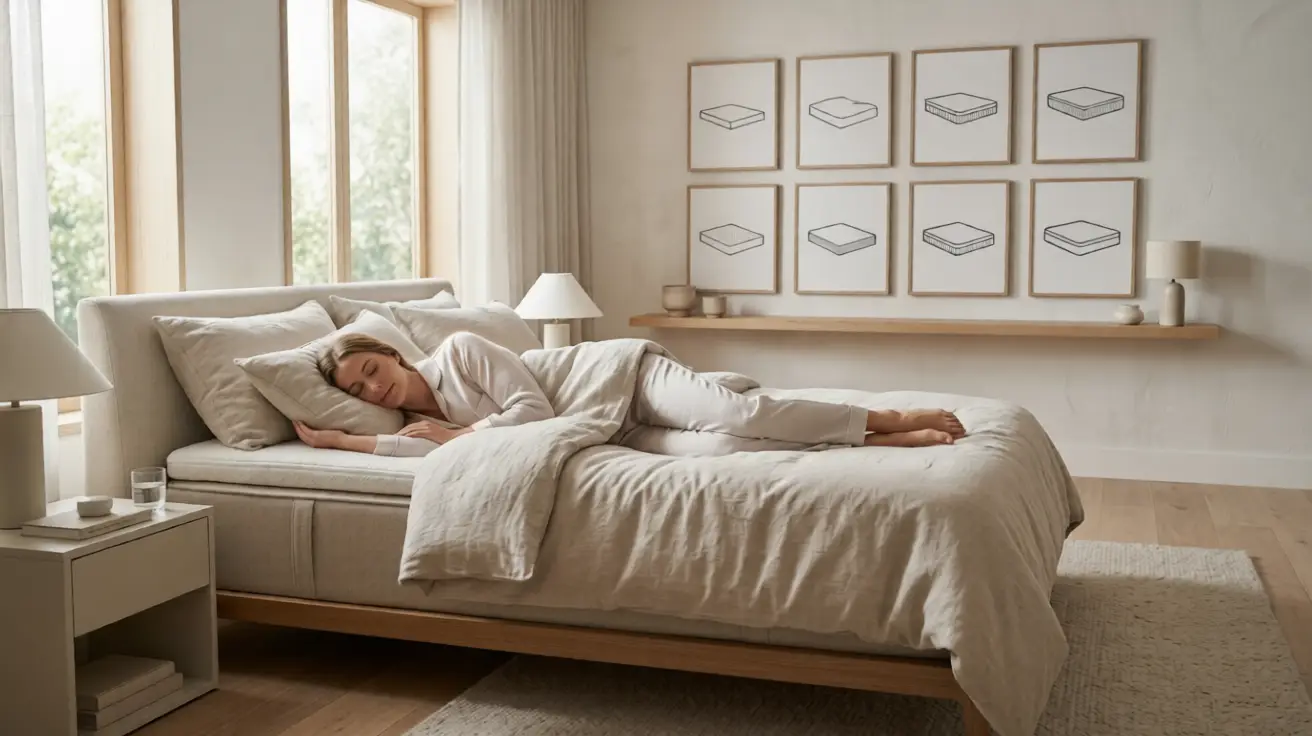
Your sleeping position. Side sleepers generally need softer, pressure-relieving beds. Back and stomach sleepers need firmer support. Combination sleepers do best with a responsive medium-firm hybrid.
Your body weight. Heavier bodies press deeper into a mattress, so what feels medium to a 150-pound sleeper can feel soft and unsupportive to a 260-pound sleeper. Over 230 pounds, prioritize coils and dense foams.
Temperature. All-foam beds trap more heat than hybrids. If you sleep hot, a coil base and a breathable or actively cooling cover make a real difference.
Trial and return policy. Since you can’t test the bed first, the trial is your safety net. Look for at least 100 nights and free returns, and read the fine print on any return fees.
Setup logistics. A boxed queen typically weighs 100 pounds or more, so plan on a second set of hands. Once unrolled, most beds need 24 to 72 hours to fully expand, and a mild “new mattress” smell from off-gassing is normal and fades within a day or two.
FAQ
Is a mattress in a box as good as a regular mattress?
Yes. Boxed mattresses use the same foams, coils, and materials as showroom beds. The compression process doesn’t damage quality construction. The main difference is the buying experience: you test it at home during a sleep trial instead of in a store.
How long does a mattress in a box take to expand?
Most reach about 90% of their full size within a few hours, but manufacturers recommend waiting 24 to 72 hours before judging the feel. You can usually sleep on it the first night without harming the mattress.
How long do boxed mattresses last?
A quality boxed mattress lasts roughly 7 to 10 years, similar to a traditional bed. Hybrids and denser foams last longer than cheap, low-density foam models. Warranties of 15 years to lifetime are a good signal of build quality.
Can you put a mattress in a box on any bed frame?
Almost any solid, supportive base works: slatted frames (slats no more than 3 inches apart), platform beds, box springs, adjustable bases, or the floor. Weak or widely spaced slats can void warranties, so check your brand’s requirements.
Do mattresses in a box smell when you open them?
Usually, yes. That “new mattress” odor comes from off-gassing, the release of harmless compounds when compressed foam meets air. It typically fades within a few hours to a couple of days. Airing the room out speeds things up.
Can you return a mattress in a box?
Nearly all major brands accept returns within the sleep trial window, which ranges from about 100 to 365 nights. You don’t stuff the bed back in the box. The company arranges pickup, and returned mattresses are typically donated or recycled.
The Bottom Line
For most people, the Helix Midnight Luxe is the easiest recommendation on this list. It balances comfort and support well enough that almost anyone can sleep happily on it. If budget is the deciding factor, the Nectar Classic delivers a shocking amount of quality for the price, plus a full year to change your mind.
Beyond those two, let your sleep style pick for you: Nolah for side sleepers, DreamCloud for back and stomach sleepers, Aurora Luxe if you run hot, Plank if you like it firm, and Helix Plus if you’re a bigger-bodied sleeper who’s been let down by standard beds.